China is paying solo founders up to $720,000 to build companies with no employees
Chinese cities are offering up to $720K to solo AI founders who build companies without employees. Here's what's confirmed and what it means for solo founders.
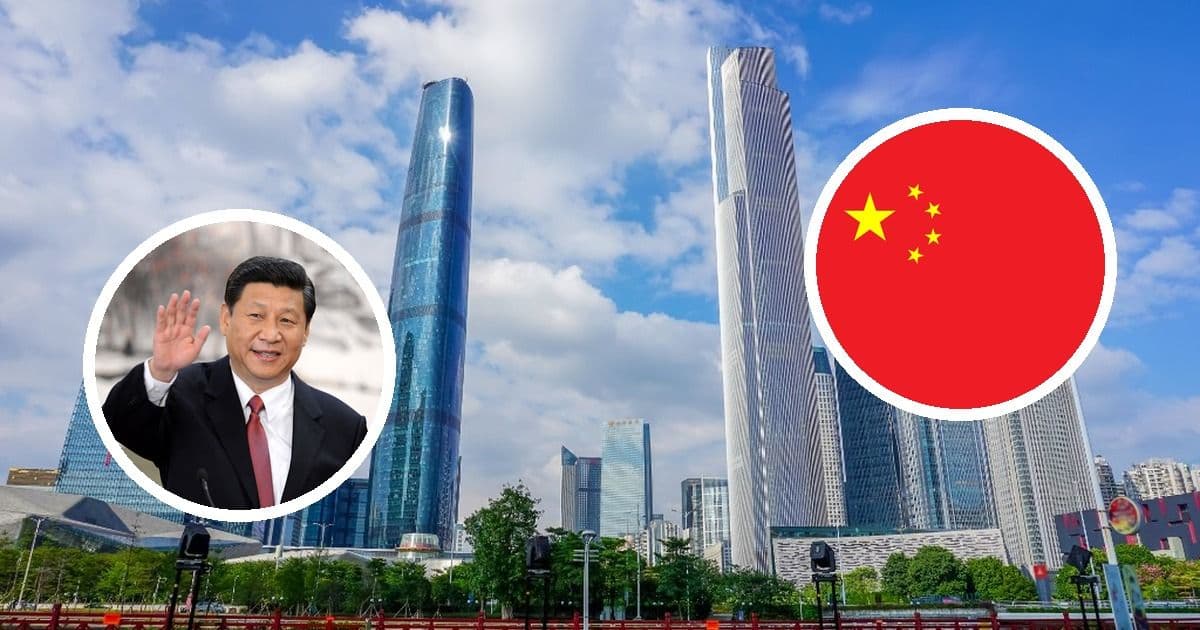

Chinese cities are offering up to 5 million yuan (~$720,000) to solo founders who build companies using AI agents, no employees needed. Shenzhen's Longgang District published the "one-person company" (OPC) policy draft in March 2026; Qingdao, Chengdu, and Guangdong Province have since followed. For AI-skilled builders, China just became one of the most aggressive places to set up shop.
According to China's State Council Information Office, "driven by AI, 'One Person Companies' have seen explosive growth across China in early 2026." The Longgang District published its draft "Several Measures to Support OpenClaw and One-Person Company Development" on March 7, 2026, with public consultation closing April 6. The policy is expected to take effect later in 2026 with a three-year validity window.
What the subsidy packages include
The Longgang package covers multiple categories. According to NYU Shanghai's research summary of the policy draft, qualifying solo founders can access:
- Up to 2 million yuan (~$280,000) for code contributions to the OpenClaw AI agent ecosystem
- 40% reimbursement on computing infrastructure investments, capped at 2 million yuan per year
- Relocation bonuses of up to 100,000 yuan (~$14,000)
- Free compute credits and rent-free office space for up to three years
Other cities are building their own layers. Chengdu is offering up to 20,000 yuan ($2,800) for graduates who launch AI-powered one-person companies. Guangdong Province published a 2026–2028 action plan targeting 10 OPC communities this year and 100 by 2028. According to Alibaba's president, roughly 30–40% of Alibaba.com's platform clients are already operating as solo, AI-powered companies.
Why China is betting on zero-employee companies
The backdrop is a mix of economic pressure and strategic calculation. Urban youth unemployment in China hovered between 15–20% in the years leading into 2026, and traditional SMBs face high overheads. The one-person company model sidesteps both.
Central to all of this is OpenClaw — an open-source AI agent framework that lets a single person automate marketing, logistics, customer service, and technical tasks through coordinated AI agents. One example cited by SCIO: a Jinan-based solo company hit 7 million yuan (~$1 million USD) in annual turnover in 2025, with minimal rent and zero full-time staff. China's average OPC now takes just 12 days to set up — down from months under old company registration rules.
Local governments are treating OpenClaw infrastructure the way earlier administrations treated industrial parks: economic infrastructure worth subsidizing at scale. The programs are specifically focused on industrial AI, robotics, and what Chinese policy documents call "embodied intelligence" — integrating AI with hardware and smart city systems.
What's confirmed and what isn't
Confirmed: Longgang's draft policy was published March 7, 2026. The public comment period closed April 6. Guangdong Province, Qingdao, Chengdu, and Shangcheng District have each announced independent OPC support plans. China's State Council confirmed national OPC growth as an official policy focus in April 2026.
Still unclear: The exact date Longgang's policy takes formal effect. Whether international founders are explicitly eligible — the draft targets "individual developers and micro-enterprises" but doesn't address visa integration or foreign national eligibility. And the $720,000 figure is an upper bound across multiple subsidy categories stacked together, not a flat grant.
Critics have also flagged real security concerns. OpenClaw agents require broad system permissions — access to emails, APIs, and personal data — raising questions about oversight. Bloomberg noted that "the OpenClaw craze has a method to it," while also acknowledging the risks of handing core business operations to autonomous agents with sweeping access. User drop-off due to ROI uncertainty and security issues has already been reported.
What this means for solo founders and nomads
Nothing has changed today for nomads entering or working in China. These programs aren't visa routes. They're business subsidies for founders who establish legal entities in specific Chinese cities, which requires company registration, local residency, and likely a work permit or talent visa. Our digital nomad tax guide covers the financial compliance questions that come with setting up in a new country.
The signal, though, is significant. China is building a policy environment for the exact model many AI-enabled freelancers and location-independent builders already use: one person, distributed tools, AI handling the repetitive work. If you're building on AI agent infrastructure — especially on OpenClaw — and open to basing yourself in Shenzhen or Guangdong, monitor when the Longgang policy takes formal effect. A general online freelancer won't qualify. A solo developer contributing to AI agent infrastructure might. If you're still mapping out the best jobs for digital nomads in an AI-first era, this is exactly the kind of policy shift worth tracking.
For context on where China fits into emerging digital nomad trends, or if you're exploring online business ideas as a solo nomad, our guides have the full picture. And if you're weighing a base in Asia, our look at the best cities in China for remote workers breaks down where these programs are actually taking shape.
Want more digital nomad news?
If you want more digital nomad and remote work news like these, sign up for our free newsletter and get upcoming news straight to your inbox!

Find places, workspaces, events and a community that gets you.
Get Freaking Nomads Pro
Digital nomad and co-founder of Freaking Nomads. After leaving a corporate job in London, I co-created Freaking Nomads to inspire others to embrace remote work and find happiness wherever they go.
Read Next


Japan triples international tourist departure tax from July
Ho Chi Minh airport just added a rule that can wreck your arrival if you ignore it