The Ultimate Hawaii Digital Nomad Guide
Explore Hawaii as a digital nomad: tips on internet connectivity, cost of living, best workspaces, and U.S visa options.


Hawaii rarely shows up on "affordable digital nomad destinations" lists, and there's a good reason for that. This place is expensive, logistically tricky, and comes with challenges most travel blogs conveniently skip over. But it also offers something genuinely different for remote workers... If you know what you're getting into.
I spent time working from both Oahu and the Big Island, and the experience was complicated. Some days felt perfect with productive mornings followed by beach afternoons, while other days I was dealing with unexpected costs and internet issues.
In this guide, I'll walk you through what it's actually like to work remotely from Hawaii. The genuine lifestyle benefits, the real costs you need to budget for, and whether it's worth it for your situation.
My Experience as a Digital Nomad in Hawaii
I landed on the Big Island first, the landscapes felt like landing on Mars. I spent time near Volcanoes National Park and also in Kona, and realized how different each side of the island feels.
You can start your morning working from a cafe overlooking the ocean, grab fresh poke for lunch, and end the day exploring an actual active volcano. The Big Island is cheaper than Oahu and way more peaceful, but you absolutely need your own transportation, and the work infrastructure is more limited.
Then I moved to Oahu, and the vibe completely shifted. Waikiki brings in the energy! You’ll find tourists everywhere, and there is constant activity. But it also has everything a remote worker needs. Fast WiFi in every cafe, coworking spaces, and that perfect mix of city convenience with beach access. Plus, Oahu actually has public transportation that works, which is huge.
Why I Loved Working Remotely from Hawaii
Work-life balance basically forces itself on you
Living in Hawaii makes day-to-day balance way easier. Finish your calls, walk five minutes to the beach, swim for 20 minutes, come back feeling reset. The access to nature is just convenient.
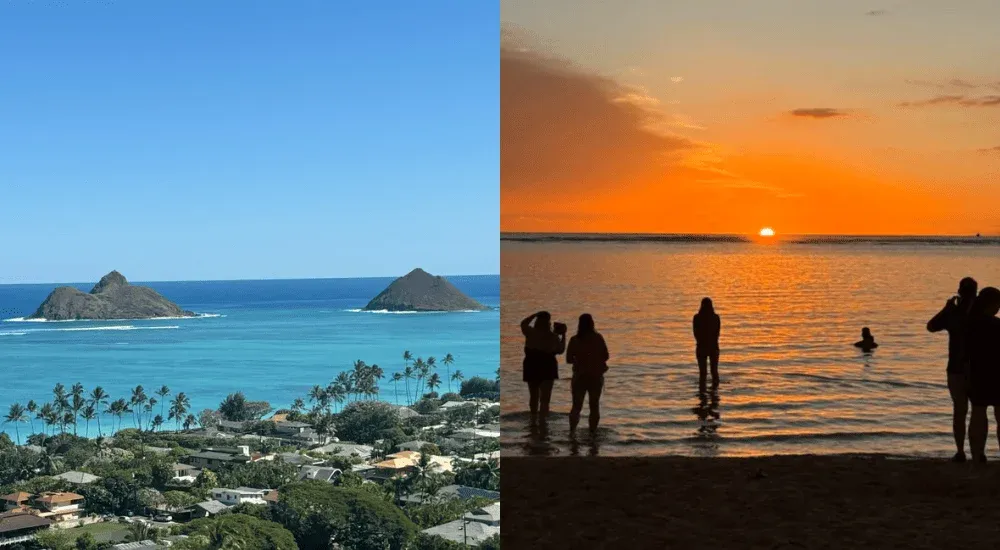
Ocean views from your workspace? Check. Hiking trails for decompressing after work? Everywhere. Sunset walks that actually help clear your head? Daily. Everything you need is within a 10-15 minute walk in places like Waikiki, Kailua, and Kona.
The Wi-Fi is shockingly fast (with important caveats)
Islands are in the middle of the Pacific, so I expected a bad internet connection. I was so wrong, at least in urban areas. The internet is very fast and stable in Waikiki, Kailua, and central Kona. I regularly got 200+ Mbps, and even random coffee shops had solid enough speeds for Zoom calls.
Hawaii's infrastructure can be unpredictable. One digital nomad I talked to went eight days without internet after a nearby fire. Power outages happen. Rural areas on the Big Island and outer islands can have spotty connections.
There's actually a solid nomad scene
In Hawaii, there's always something happening: coworking meetups, beach volleyball games, surf lessons, weekend hiking groups. Plus, everyone is friendly and willing to share their favorite spots.
You can literally choose your vibe
If you need busy city energy with tons of coworking options, Oahu is great! If you want quiet, nature-focused work surrounded by volcanic landscapes? Big Island is your spot. Choose Waikiki if you’re feeling social and want to surf between meetings.
No language barriers or adjustment period
After months bouncing through South America and Africa, landing in Hawaii felt easy. Everything's in English, credit cards work everywhere, and there's zero culture shock.
What I Didn't Particularly Like About Hawaii for Remote Work
The costs are absolutely brutal
Let's be honest, Hawaii is super expensive, and there's no sugar-coating it. A basic one-bedroom in Waikiki is around $2,500-$3,500/month. Groceries cost 50-70% more than mainland prices because everything is shipped there. A sandwich that costs $5 on the mainland runs $15 in Hawaii.
One nomad I connected with only made it work because they stayed with a friend who offered their home and car for free while traveling. Another found a converted community college dorm for $1,600/month, and that was the cheapest option after weeks of searching.
The Big Island is cheaper, you can find rooms for $500-800/month in surf shacks or shared housing on the North Shore or in Pahoa. But you're trading cost for convenience and infrastructure.
Health insurance can be a job-killer
Hawaii has unique health insurance laws that many remote workers don't know about until it's too late. Some companies have to create special Hawaii-specific insurance policies. I've heard multiple stories of people being told they had to move to another state or lose their job because their employer couldn't navigate Hawaii's insurance requirements.
Time zones will mess with you
Hawaii is 5-6 hours behind the East Coast. If you're working with U.S. teams, you need to start very early in the morning. But for Europe and Asia it's very difficult. Multiple people on social media mentioned taking calls at 3 AM or midnight to sync with global teams.
Housing is competitive and complicated
There's a major affordable housing shortage in Hawaii, and locals are rightfully protective of what's available. Many landlords prefer renting to people planning to stay indefinitely or locals only. Airbnb and short-term rentals exist in a weird legal gray area, they're technically restricted but some hosts get away with renting ohana suites, converted vans, or condos on hotel property.
Your best bets: International student housing (lots of students from China, Japan, and Pacific islands), platforms for travel nurses, long-term Airbnb negotiations, or connecting with locals through Facebook groups before you arrive. But expect competition and higher prices than you'd find almost anywhere else.
Island isolation hits different
Being stuck on an island in the middle of the Pacific Ocean may feel isolating. You can't just hop to another country for the weekend. You're there and that's it. The Big Island especially felt remote. Amazing at first, but after a few weeks, many people start craving variety and different energy.
Staying focused is hard
When perfect beach weather exists every single day, staying disciplined gets hard. I'd block out work time, then see the afternoon light hitting the waves perfectly and think "just a quick 20-minute break." Two hours later, still at the beach. Hawaii will absolutely test your work discipline.
What's the Cost of Living in Hawaii?
Housing on Oahu: $1,600-$3,500/month. The cheapest I found was a sketchy converted dorm for $1,600. Decent one-bedrooms in Waikiki or Kailua run $2,500-$3,500. On the Big Island, you can find shared rooms or surf shacks for $500-800/month, or private places for $1,300-$2,000.
Food reality: If you eat out constantly, you'll blow your budget. Casual meals run $12-18, sit-down restaurants hit $25-40 per person. Groceries are brutal too $400-600/month cooking most meals. Budget hacks from locals: Buy poke from supermarkets ($8-12 instead of $18), eat at Ala Moana food halls, grab Whole Foods takeout, shop at farmers markets, and hit Costco for bulk items.
Transportation on Oahu: The bus is only $3 per ride or $70 monthly which is totally workable. HUI car sharing is amazing for weekend trips (hourly/daily rentals).
Coworking: $300-500/month for part-time access. Coffee shops run $4-6 per drink.
Important Legal and Tax Considerations
If you're working remotely in Hawaii and getting regular paychecks with deductions, you might trigger state tax requirements. Some remote workers had to file N-15 Nonresident tax forms, and doing it two years in a row can cause extra scrutiny from the state.
Keep detailed records: flight receipts, proof of residence elsewhere, evidence of your "real" location. This protects you if you need to prove you didn't actually move to Hawaii permanently.
What Are the Visa Options for Digital Nomads in Hawaii
Hawaii is a U.S. state, so standard federal immigration rules apply. For non-U.S. citizens, you'll need proper work authorization, whether that's an H-1B, L-1, O-1, or other work visa. Tourist visas (ESTA/B-1/B-2) don't permit employment, including remote work. If your company has U.S. operations, they may be able to sponsor you. Otherwise, you're looking at the same visa requirements as anywhere else in America.
If you're looking for a similar vibe with easier visa situations, consider places like Bali, Portugal, or Mexico, which have actual digital nomad visas or more relaxed long-term tourist options. Hawaii is really best suited for U.S. citizens or those with existing U.S. work permits.
What It's Like to Work Remotely in Hawaii
Working remotely from Hawaii feels like living in two realities at once. The lifestyle benefits are real and immediate, but so are the logistical challenges. It's the kind of place where you can have your most productive, balanced month ever or watch your budget disappear faster than you planned.
Internet (and backup plans)
Most places in Waikiki, Kailua, and Kona have fiber pulling 100-300 Mbps. But rural Big Island, Hilo, and Pahoa can be rough. You should have a backup. 5G hotspot, Starlink (increasingly common and reliable), or at minimum a solid mobile data plan. Power outages and internet failures happen, especially in rural areas.
Work Spots, Laptop-Friendly Cafés and Coworking Spaces
Best Coworking Spaces in Hawaii
- WaiWai Collective / Ka Waiwai (Honolulu): Highly recommended by multiple nomads. Flexible membership options, 24/7 access available, two locations including a beautiful former artists' gallery above a bookstore. They do cultural and educational programming too. Most affordable and friendly option.
- BoxJelly (Honolulu): The OG Hawaii coworking space. Great community, regular events, solid WiFi.
- WeWork (Honolulu): Multiple locations, professional setup, reliable but pricier.
- Entrepreneurs sandbox: Gives you flexible coworking access with options from day passes to monthly plans, plus workspace amenities and discounts at Hub Coworking locations in Honolulu.
Best Laptop-Friendly Cafés in Hawaii
- Coffee Talk (Honolulu): Great local coffee, solid WiFi, plenty of seating, chill local vibe.
- Kona Coffee & Tea (Big Island): Perfect for Kona work sessions. Good AC, reliable internet, coffee from the source.
- Morning Brew (Honolulu): Popular with students and freelancers. Good for 2-3 hour sessions.
- Hilo cafes (Big Island): Several spots for WiFi work, though less reliable than Kona side.
Best Areas to Stay as a Digital Nomad in Hawaii
Oahu - Waikiki & Neighborhoods
Most convenient for remote workers. Coffee shops, coworking, restaurants, beach access everywhere. The Bus makes it workable without a car. Kailua, Lanikai, and Kaka'ako offer more local vibes. North Shore is cheaper and more laid-back.
Big Island - Kona vs Hilo
Kona (west): Sunnier, better infrastructure, more touristy. The south end near the Captain Cook area is particularly nice.
Hilo (east): Rainier, greener, way quieter. The Pahoa area is rural, peaceful, but WiFi can be rough. Big Island is significantly cheaper but has fewer work opportunities if you need something non-remote. You'll need a car.
Maui - Paia & Kihei
Middle ground between Oahu's bustle and Big Island's solitude. Good cafes and coworking, best beaches arguably. More expensive than Big Island, less chaotic than Waikiki.
Kauai
Most remote option. Incredible nature, minimal infrastructure. Only choose if you're okay working from home and don't need much social interaction.
Getting Around Hawaii
Oahu: TheBus is reliable and cheap. HUI car sharing is perfect for weekend trips (hourly/daily rentals at affordable rates). I used combo: bus/walking during the week, HUI on weekends. Uber/Lyft work in Waikiki but add up. Many people explore with locals they meet through Couchsurfing or meetups.
Big Island and others: You need transportation. Public transit barely exists. But the drives are stunning! Lava fields, coastal highways, dramatic scenery everywhere.
Island hopping: Hawaiian Airlines and Southwest have 30-45 minute flights for $50-100 if booked ahead. Totally doable to live on Oahu and explore other islands on weekends.
Culture and Food
The Aloha spirit isn't just tourist marketing, locals are very friendly. But there's also a serious affordable housing crisis and poverty on outer islands. Be respectful: Learn "mahalo" and "aloha," take shoes off before entering homes, be mindful on beaches and trails, and understand you're a guest in someone's home.
Budget-friendly food: Poke from supermarkets, udon in downtown Honolulu, Ala Moana food halls, Whole Foods takeout enjoyed on a terrace, farmers markets. Leonard's Bakery for malasadas. Local plate lunch spots for $12-18.

Top Tips for Digital Nomads in Hawaii
- Contact people when you're there: Housing goes immediately. I had better luck finding places after arriving and networking.
- Have internet backup: Power and internet outages happen. Budget for a 5G hotspot or Starlink if staying rural.
- Confirm health insurance: Check if your employer can provide Hawaii-compliant insurance before committing.
- Budget for Costco runs: Grocery prices are brutal. Big-box stores save you tons.
- Consider Big Island for budget: Significantly cheaper but less infrastructure. Good for work mode.
- Use HUI car sharing on Oahu: Way more affordable than daily rentals for weekend adventures.
- Join Facebook groups before arriving: "Hawaii Digital Nomads & Remote Workers" has housing leads and community info.
- Skip peak seasons: Summer and winter holidays are packed and pricey. April-May and September-October are better.
- Understand tax implications: Keep records of your time in/out of state if working there long-term.
- Respect the housing crisis: Be mindful that there's real poverty and housing shortage affecting locals.
So, Is Hawaii Actually Worth It?
Here's my completely honest take after living there, talking to dozens of digital nomads, and hearing real experiences: Hawaii is worth it if you can genuinely afford it, have flexible work arrangements, and value quality of life over saving money.
You'll spend 2-3x what you would in Thailand, Portugal, or Mexico. The health insurance complications alone have ended people's remote work arrangements. Time zones can be brutal. Housing is competitive and complicated.
But here's the thing: Multiple nomads told me they'd do it again in a heartbeat. The lifestyle benefits like constant nature access, incredible food, active outdoor culture, work-life balance that happens naturally. It all makes it worth the cost.
Hawaii is perfect for:
- U.S. remote workers who can handle the health insurance requirements
- Digital nomads with solid budgets ($3,000-$6,000/month)
- People working U.S. time zones (or comfortable with early/late calls)
- Anyone prioritizing nature, wellness, and outdoor lifestyle over nightlife and cultural variety
- Remote workers willing to connect with locals and integrate respectfully
Skip Hawaii if:
- You're on a tight budget because costs add up shockingly fast
- You work primarily with European/Asian time zones
- Your employer can't navigate Hawaii's unique health insurance laws
- You need constant cultural variety and city energy
You struggle with work discipline when surrounded by perfect beach weather.
Ready to Make Hawaii Your Next Digital Nomad Destination?
Find places, workspaces, events and a community that gets you.
Get Pro access
Dippan is the traveler behind TripsWithDipp, sharing travel guides and itineraries from real experiences on the road. She's usually chasing the next adventure, food, and Wi-Fi all at the same time.

Freaking Nomads is supported by you. Clicking through our links may earn us a small affiliate commission, and that's what allows us to keep producing free, helpful content. Learn more
Read Next

Mexico City for Digital Nomads: The Ultimate Guide


Digital Nomad Guide to Cusco, Peru