The Ultimate Guide to Japan Travel for Digital Nomads
The complete guide for digital nomads in Japan. Tips on destinations, workspaces, culture & more to thrive in the Land of the Rising Sun.

Japan has something really attractive for all people, including digital nomads. It’s a country with a lot of shades and cultural clashes, but that’s why it is loved by almost everyone.
Living there and working as a nomad is truly feasible, also because Japan offers different types of experiences for all tastes: you get the highly advanced cities like Tokyo, Osaka, or Kanazawa, but you can also find rural gems like Kyoto, Shirakawa-go, Takayama, or Biwa Lake, where you can enjoy a quieter and more authentic Japanese vibe.
I wrapped this guide for you to share my experience and let you decide if it’s a suitable place for you to travel and work or not.
Why should you visit Japan as a Digital Nomad?
I can describe Japan with three words: vibrant, kawaii (cute), and open your mind.
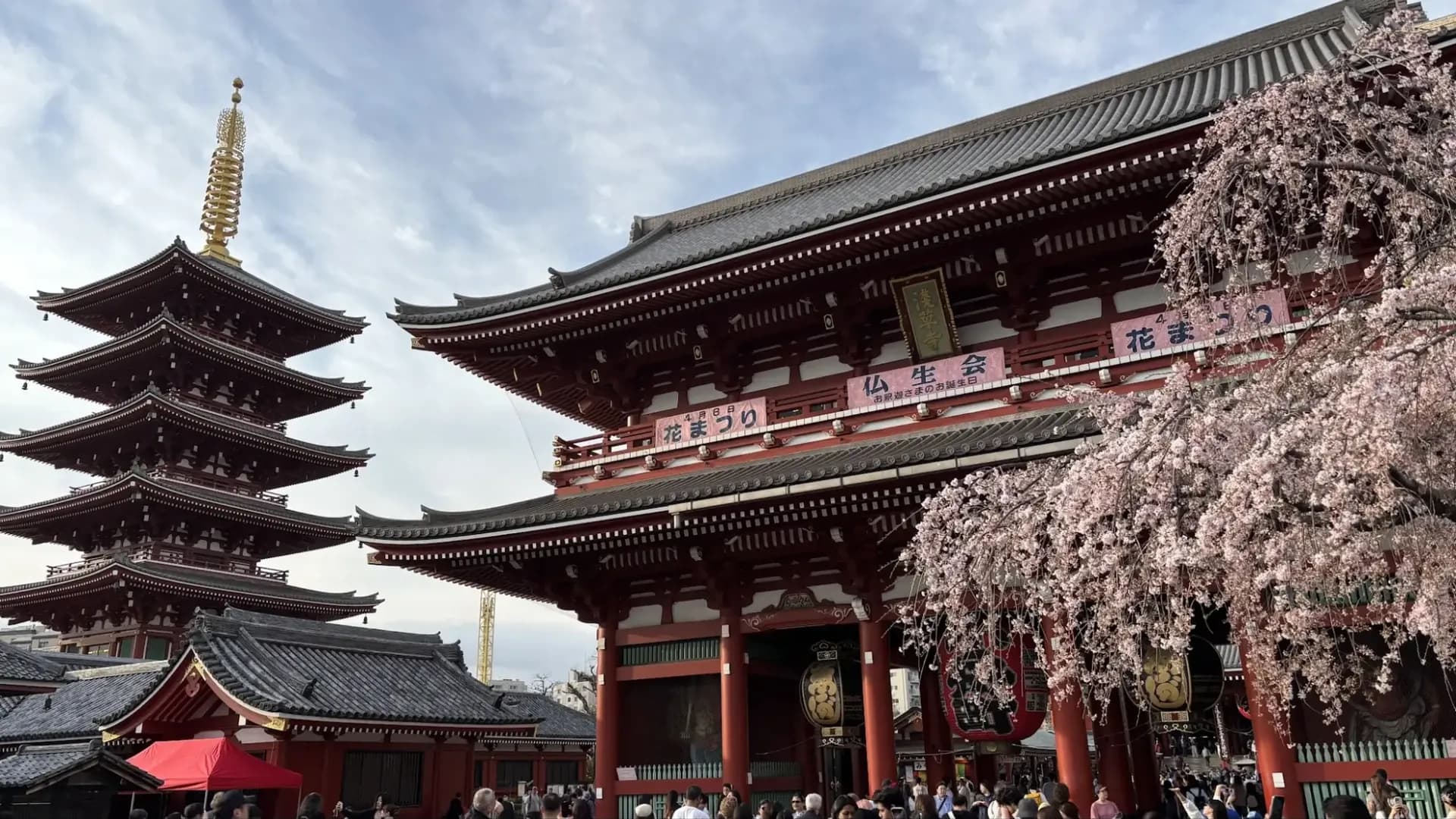
Your heart will be stolen by the frenetic and modern atmosphere of Tokyo, the traditional and slowlife Takayama, the relaxed temples of Kyoto, the lively street food of Osaka, and a lot of other incredible places.
For a digital nomad, it’s perfect: Super fast WiFi is often available, there are plenty of coworking spaces, and thanks to safety, you will be able to work freely, leaving your belongings knowing nobody steals them. Also, with more time than an ordinary tourist, it’s possible to immerse yourself in their daily life and see uncommon paths, which will show you a very Japanese culture.
Living and working remotely in Japan
Is it possible to live for a period in Japan and work remotely? Short answer: yes. Long answer: yes, but there are some considerations to keep in mind. For example, the fact that you have to apply for a specific digital nomad visa, but also that it’s required to prove the annual income of 10 million of Yen, which is almost 54,000 Euros/64,000 USD, and maybe not everyone could reach this amount.
Visa for Digital Nomads
Once, to enter Japan, there was only a normal tourist visa, which allowed you to stay in the country for up to 3 months. But recently things have changed, and fortunately, in March 2024, Japan has announced a new type of visa, specific for Digital Nomads.
It’s a specific visa for designated activities (Digital Nomad, Spouse or Child of Digital Nomad) and it allows you to stay in Japan for up to 6 months, but there’s no guarantee of extension. You can ask for it at the Japanese embassy of the country where you have residence, or write/call the embassy of the country you are living temporarily and ask them how to do it. This is because the procedure can’t be done entirely online.
Documents you need to apply for the visa
- Visa application form (with a photo)
- Passport
- Certificate of eligibility
- Documents explaining the applicant's planned activities and period of stay during their stay in Japan
- Documents proving that the applicant's annual income is JPY 10 million or more. (Note: Tax payment certificate, income certificate, employment contract, contract with a business partner, which clearly states the contract period and the contract amount).
- Documents proving that the applicant has insurance against death, injury, or illness during their stay in Japan (compensation for medical treatment for injury or illness must be JPY 10 million or more).
- A copy of the certificate of insurance coverage and policy summary, a copy of the credit card, and documents proving supplementary compensation.
After applying for the visa with all documents, it takes approximately one week to process the application. You can find a more detailed explanation and official information on the Ministry of Foreign Affairs of Japan website.
Other visa types
If you want a different solution for staying, there are other visas you can apply for:
- Short-term stay: This is the most common way to enter the country, and it’s a stay of up to 90 days for tourism, business, visiting friends or relatives that doesn’t include remunerative activities. It’s the most common visa also for digital nomads who want to stay just 3 months, but legally you can’t work while you are staying in Japan. That’s why there’s a new specific visa for digital nomads. Here is the list of regions and countries included in the short-term stay.
- Work or long-term stay: If you want to work in Japan or stay more than 90 days, you need to apply for a specific long-term visa and obtain a Certificate of Eligibility from the Immigration Services Agency of Japan beforehand. This is a specific document which confirms you meet the requirements for a long-term stay. This category includes the Working Holiday Visa: a programme of a year for people between 18 and 30 years that allows them to engage in employment as an incidental activity of their holidays for the purpose of supplementing their travel funds.
The good and the bad of being a digital nomad in Japan
After being in Japan for almost three months of my life, I can truly say it’s a difficult country to understand. When I first arrived, I was deeply in love with it because of my obsession for anime, japanese “cartoons”, but as I got deeper, the more I realized the complexity and different facets of Japanese culture.
What you will love
Cleanliness, order, punctuality
All the cities I visited were extremely clean. No trash on sidewalks or on roads, while hotels, hostels, rooms, and other types of accommodation were always immaculate. Things are often tidy in every place. For example, there aren’t bins in the streets because they believe it’s messy and dirty (and honestly? They are right!). But above all, they are punctual. If your train will depart from the station at 12:15, you will need to be at the platform 10 minutes earlier because at 12:15 the doors will be already closed and the train will leave.
Wi-Fi, general services, konbini
You will be able to work everywhere since internet connection is always available for free. Every place has it and if it’s not shown, you can ask someone in order to get the login details. You can find it even in remote places like rural villages, maybe less fast, but in that case you can use your personal eSIM (I have some suggestions about it for you later!).
Public services and healthcare are super efficient
You can move easily with the subway (Tokyo has 32 lines!), buses, night buses. which are cheaper and you can sleep while moving (you can find best options on WillerTravel). Police stations are available in every neighbourhood, and you can ask for information or rely on policemen for any trouble. As far as healthcare, you will be impressed by its efficiency (hoping you will never need it!). It’s important though that you buy health insurance, because medical services are expensive.
Konbini, a 24/7 mini market, will be your best friend. The most famous are 7-eleven, Lawson and Family Mart. You will be always welcomed with a kind “Irasshaimase” and find everything you need with low cost.
Low cost of living, safety, kindness
Sounds weird and a bit counterintuitive, but Japan is not that expensive. Of course, it's not as affordable as places like Bali or Thailand, but if someone tells you they need thousands of dollars to stay there, it’s probably because these people decided to rely on travel agencies. A big cup of ramen will cost you between 6 to 9 USD, and a subway ticket could cost from 2 to 3 USD. At minimarkets you will always find ready food or first necessity things from 1 to 5 USD (an onigiri, riceball, generally costs 1 or 2 USD). You can save your money by sleeping in hostels or in long-term accommodation. If you need to move to other cities, instead of taking the high-speed train, shinkansen, you can take normal trains or buses.
You will never feel in danger in Japan
Safety is the magic word in Japapn. In general, for foreign the country is extremely safe. You can leave your laptop or smartphone on the cafe’s table where you are working when you need to go to restrooms or outside for a call, and nobody will steal anything. I took many night buses alone to move through cities and never felt watched, harassed, or unsafe.
Japanese people are incredibly kind
They have a particular culture and behavior deeply rooted in their history. They are polite and respectful to keep harmony, avoid conflict and maintain social balance. For us, this is a refreshing wave of grateful emotions and awareness on how to behave (kindness is contagious and you will behave like them in order to not be rude or disrespectful). Also, to be a perfect guest, you are required to follow some rules and etiquette.
What you will find challenging
Strictness, inflexibility, decorum
The more you stay in Japan, the more you will realize the difference between “tatemae” and “honne”. Yes, Japanese people are kind and polite, but most of the time it’s because they have been educated to keep balance and avoid trouble. They were taught from childhood not bother others and to let things flow easily in order to let everything work well like a super oiled gears-machine. For this reason, you will for sure be introduced to tatemae, superficial politeness and kindness, and if you are lucky you will meet someone who will show you his real emotions, honne, being authentic and genuine.
For the same reason you will discover how strict Japanese can be. They follow rules and it’s hard to find someone who is nonconformist. And if you break some untold precept, they will despise you. Recently, misbehaving tourists are increasingly causing frictions and the consequences are general discontent by locals. No Japanese will tell you something is going wrong, but in their thoughts and hearts the feeling will persist.
Hard to find a community
Japanese people seem to be very shy, but it’s different from our perception of it. They were trained to stay quiet because rules come first. They learn: “be kind”, “follow the rules”, “don’t bother the others”, but sometimes the lessons become “don’t stand out”, so even if they have an opinion, they often don’t say it. Also, they study English from a very young age, but never train in speaking, so it’s difficult to talk to them. I recommend being proactive and making the first move, because they won’t do that, except someone usually old. Once, I tried with a museum guide guy and it was the best choice: we went out and talked a lot about Italian and Japanese cultures, and we became friends.
Forever a foreign
Even if you are able to speak Japanese perfectly and live there for a long time, you will always be a foreign to Japanese people. This happens because they were politically isolated for a long time. They have never mixed with people from other countries and never created diversity. Only recently, you can hear more about unions between Japanese and foreign people. That’s the case of one friend of mine, who I met in Japan. She is German and went to visit her Japanese boyfriend. She’s able to speak the Japanese language perfectly, but locals always see her as a stranger.
Where to stay in Japan as a Digital Nomad
Every city could be a suitable destination for a digital nomad, but each city has its own features you need to know:
- Tokyo, the dynamic capital, is the best choice for its excellent infrastructures, high speed connections, and bigger digital nomad communities. It has higher prices, but also a lot of cafès, coworking spaces, and events. It’s perfect if you are looking for a vibrant urban city style.
- Osaka, the second largest city of Japan, has a better convivial atmosphere, people are generally funnier and easier; you will feel more welcomed compared to Tokyo. It’s known for its tasty food and prices are lower. Coworking spaces are increasing.
- Fukuoka, home of Colive Fukuoka, is becoming the perfect city for a digital nomad, thanks to its rising community of nomad workers, warmer locals, affordable prices and man-sized facilities which allow you to easily access beaches, mountains and hot springs. A relaxed city with all you need could be the right destination.
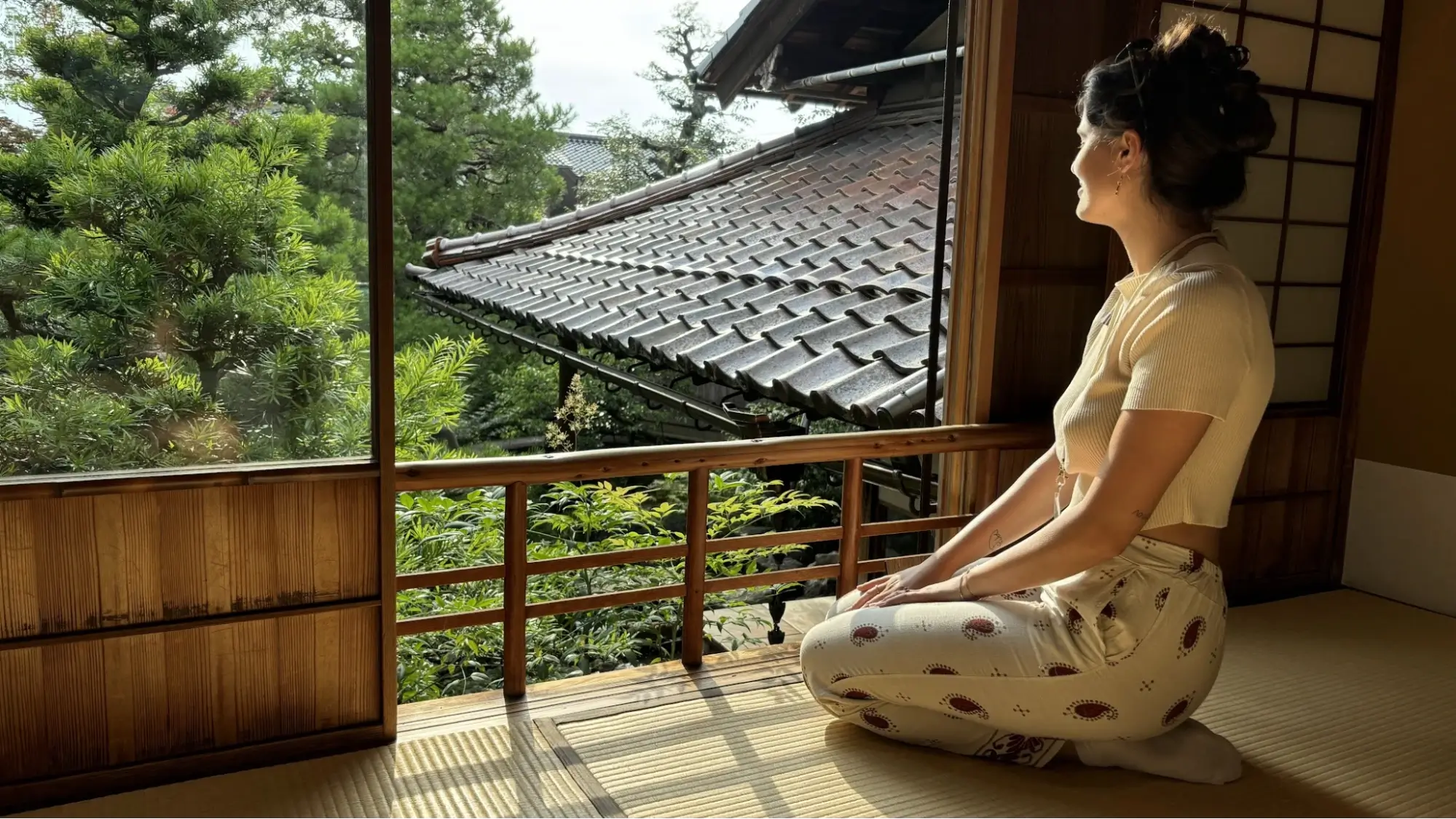
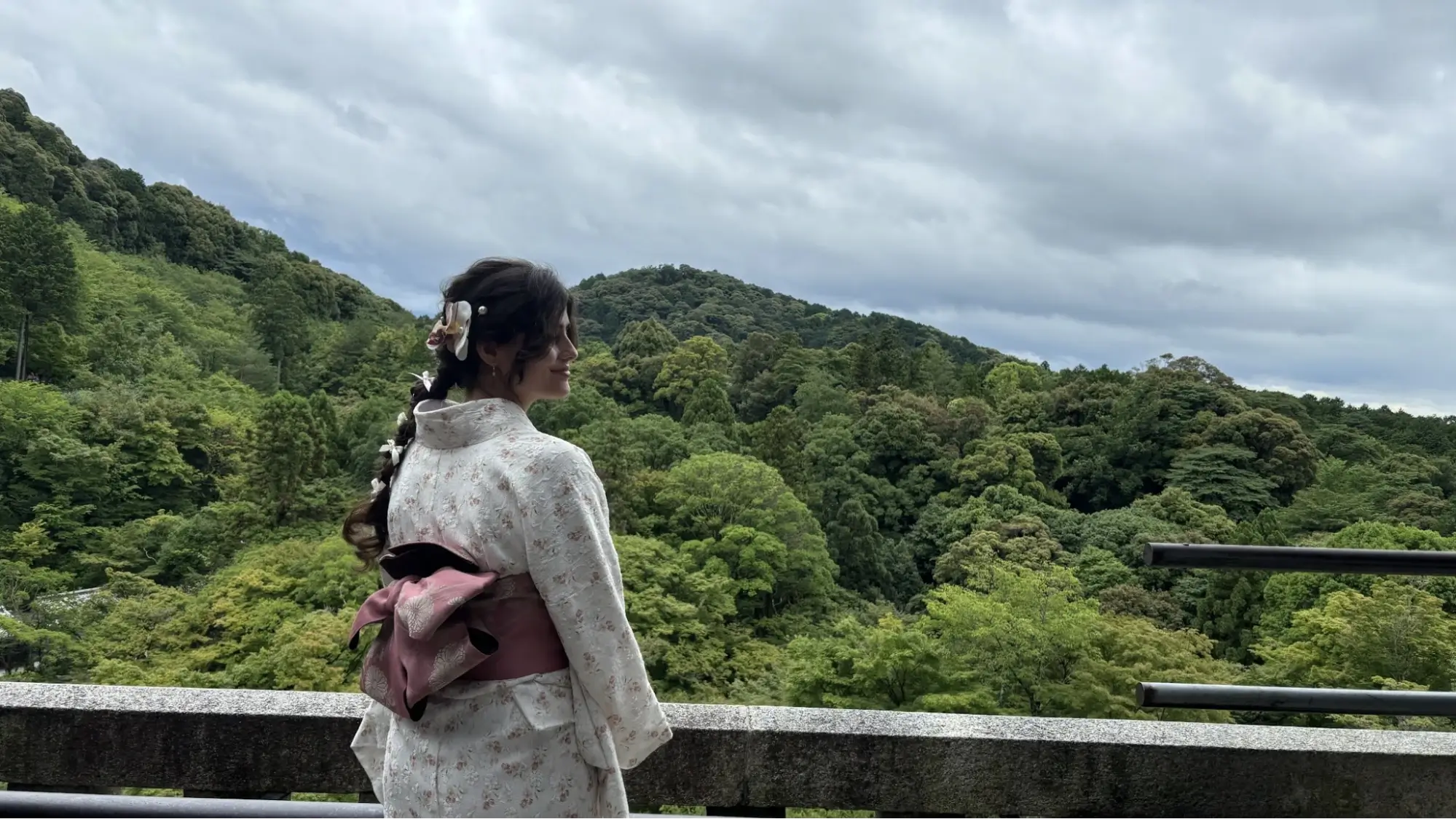
- Kyoto, a cultural cradle, is the perfect city if you want to be inspired by Japanese history and traditions. Far from tourist spots you can easily find a quiet cafè with internet connection and some typical experiences like wearing kimono, attending a tea ceremony and exploring less known, but beautiful temples.
- Kanazawa has a mix of historical charm and modern comfort. It’s a small city with samurai districts, historical castles and all the services you need. This city is ideal for those who want history, walkability and a relaxed daily routine.
If you like spending time alone, being surrounded by nature, I also suggest these rural places: Shirakawa-go (UNESCO World Heritage Site for its traditional gassho-zukuri house), Takayama (known for one of the best japanese annual festivals), Nikko (UNESCO World Heritage Site for its temples), Hakone (known for hot springs and Mount Fuji view).
Useful info for digital nomads in Japan
When is the best time to visit Japan?
The best seasons are spring and autumn. Temperatures are mild and you can enjoy two of the most beautiful nature events of the year: hanami, peach flowers blossom and koyo, autumn foliage which decorate temples and rural spots. But if you intend to stay more relaxed without plenty of tourists, it's better to go in the winter season - even if it’s quite cold. I don’t recommend staying after June because summer and rainy season become unbearable.
Internet connectivity in Japan
WiFi is almost always available everywhere, and it works well. If you want you can also rent at the airport a portable WiFi device and have connection always with you.
If you prefer having internet within your phone i recommend a sim, or better an eSIM (check your mobile information to know if supported). Everyone always talks about Airalo, Jetpac, Mobal, Saily, Holafly but in my opinion the best eSIM value for money is on Trip.com: prices are the lowest and connections work well.
How to get around Japan
Getting around Japan is one of the easiest (and most satisfying) parts of living and traveling here. The country has one of the most efficient, punctual, and well-connected transportation systems in the world, and once you understand the basics, moving around becomes super easy.
For everyday travel like subways, buses, some taxis, and even convenience stores and vending machines, you’ll want a transportation IC card like Suica, PASMO, or ICOCA. These work across most cities and regions and can be added directly to your phone via Apple Wallet or Google Wallet, or purchased physically at train stations and convenience stores. Basically, it becomes your everyday payment tool while moving around Japan.
For navigation, Google Maps works extremely well. It shows platforms, train lines, transfer times, and even which carriage is best to board. If you’ve ever been stressed about public transport elsewhere, Japan will feel like a relief.
Japan Rail Pass for long-distance travel
If you’re planning to move often between different cities like Tokyo, Kyoto, and Osaka within a short period of time, the Japan Rail Pass is absolutely worth considering.
It gives you unlimited travel on JR trains nationwide, including most Shinkansen lines, as well as some JR buses, airport transfer routes, and even the JR ferry to Miyajima. In other words, it covers far more than just trains!
You buy the pass for a fixed period, 7, 14, or 21 consecutive days, and the countdown starts once you activate it. You can’t pause it or top it up, but while it’s active, you can travel as much as you want without booking or buying individual tickets every time. This makes spontaneous trips much easier and often cheaper overall.
For daily life, IC cards + Google Maps are all you need.
For exploring Japan beyond one city, especially if you’re traveling intensively, the Japan Rail Pass is one of the easiest and most convenient ways to move around the country without overthinking logistics or costs.
Health insurance
Never forget to always ghave health insurance while traveling. Japan isn’t an exception to this rule. Health infrastructures are excellent but expensive. I recommend Heymondo.com, which has the best price and options for travelers.
How to find accommodations in Japan
For shorter stays, check Agoda, AirBnb or Booking.com.
If you want to stay longer and grow your own community, sharehouse and co-living are the best options to make new friends and spend less money. You can check offers on these websites: Borderless House, Uninest, Weave Living, Oak House, InterWhao, Go! Go! Nihon.
Some useful apps to stay connected in Japan
Unlike China or South Korea, Japan has in common with occidentals some phone applications making our life easier. But if you mean to be involved in their culture, you can download these apps:
- Line: it’s the asian WhatsApp
- PayPay: popular payments app (mostly in japanese)
- GO: to rent taxi
- Tabelog: restaurants reviews (only in japanese)
- Japan Travel by NAVITIME: plan routes by train, subway, and bus throughout Japan
- Mercari: to sell second-hand objects (only in japanese)
Cultural etiquette
Being polite and respectful of other cultures is one of the best values in a traveler. This makes a difference between you and a general tourist. Japan is famous for its different manners in public spaces, these are most known:
- Remove your shoes when entering temples, ryokan and some particular restaurants.
- Don’t eat while walking on sidewalks and smoke in designated smoking areas
- Keep your own trash and leave it in a konbini bin or at your home
- Don’t speak loudly or eat in subways or trains. No mobile calls.
- Use both hands to give or receive money/receipts.
- Don’t leave tips, for them it isn't a pleasure.
Must-try food in Japan
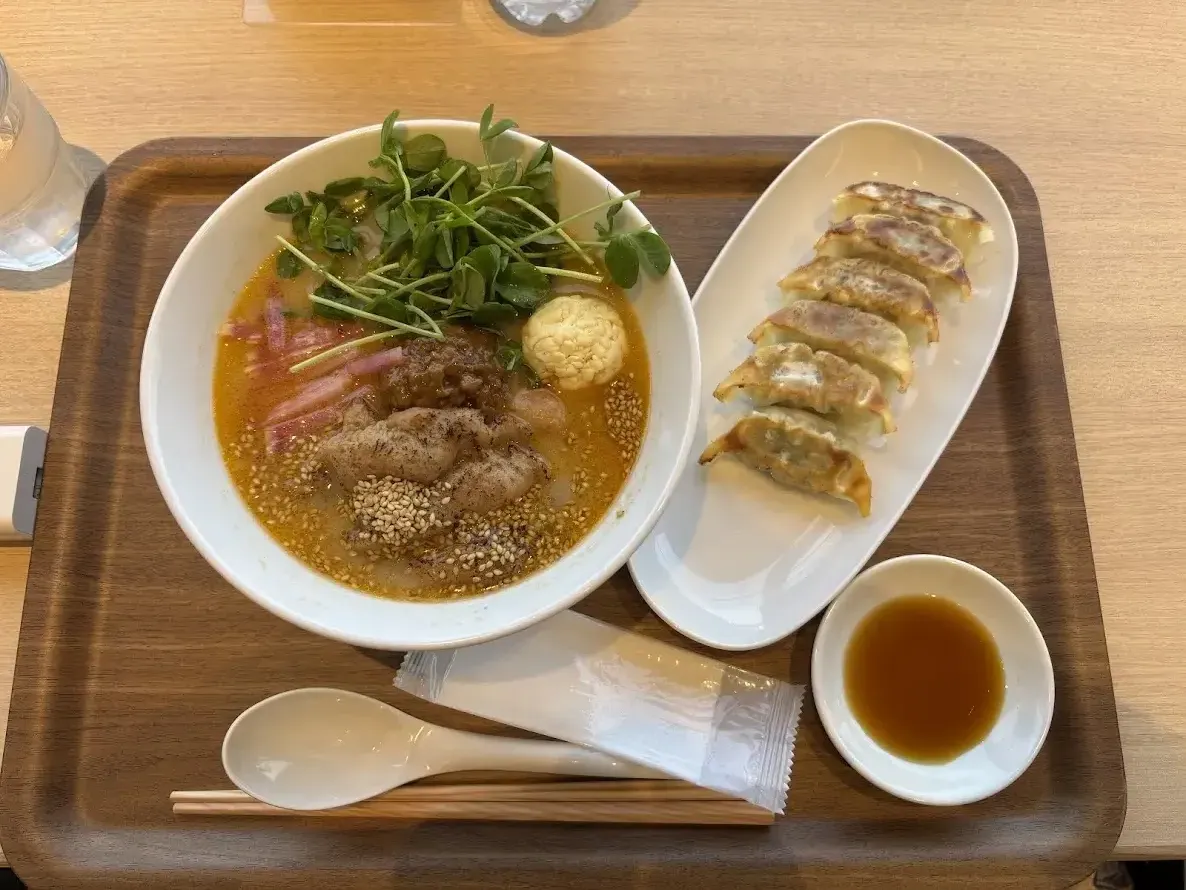
The first time I visited Japan, I ate one of the dishes I would have considered my favourite later in my life. Which was it? Of course, ramen!
Japanese food and flavors are shocking as is their culture. I strongly recommend trying their cusine, especially these typical dishes:
- Ramen: noodles in hot broth, definitely will warm your soul.
- Sushi: not the one you usually eat, the real one.
- Udon: always noodles in broth, but a bigger type of spaghetti.
- Onigiri: riceball, incredibly cheap and filling.
- Miso soup: so flavored and warm.
- Tempura: usually fish but also vegetables breaded and fried.
- Kaiseki: traditional meal made by little cups of different things.
- Gyoza: best ravioli in the world.
- Okonomiyaki: a cabbage pancake, you can add all the ingredients you want.
If you follow a specific diet, don’t worry, because there are plenty of options nowadays. You can use these cards to explain waiter or waitress your needs:
Vegetarians
私はベジタリアンです。肉、魚、シーフード、鶏肉、そして肉や魚の出汁が入っ ている料理は食べられません。卵や乳製品は食べられます。これに該当しない料 理はありますか?
I’m a vegetarian. I can’t eat meat, fish, seafood, chicken, or dishes that contain meat or fish broth. I can eat eggs and dairy products. Are there any dishes that do not contain these ingredients?
Vegans
私はヴィーガンです。肉、魚、シーフード、鶏肉、卵、乳製品、蜂蜜、そして肉 や魚の出汁が入っている料理は食べられません。これに該当しない料理はありま すか?
I’m vegan. I can’t eat meat, fish, seafood, chicken, eggs, dairy products, honey, or dishes that contain meat or fish broth. Are there any dishes that do not contain these ingredients?
Celiac
私はセリアック病です。小麦、大麦、ライ麦、それらが含まれている食品(醤油 や揚げ物の衣など)を食べられません。グルテンを含まない料理はありますか
I am celiac, so I can't eat wheat, barley, rye, or foods that contain them such as soy sauce or breading on fried foods. Are there any gluten-free dishes?
Best things to do in Japan as a Digital Nomad
Authentic experiences and activities will make you fall in love with the land of the rising sun. My favourite and tested are these:
Wearing kimono
One of the most magical things to do is wearing Japanese traditional clothes and walking through ancient streets and quarters like Sannenzaka & Ninenzaka path in Kyoto, or Samurai district in Kanazawa. In touristy areas, there are a lot of rental shops but I suggest you take a look at the Klook for discounts.
Collecting eki stamps
In Japan, at almost every train station, there are stamps that look almost like paintings and represent the train stop, hence “eki stamp,” which means station stamp. In addition to the fun of collecting them, you will be amused in searching for them (because they are not always easy to find, and sometimes you have to ask the station staff). Once you complete your diary, you will have a unique and free souvenir of your trip!
Participating in a tea ceremony
This traditional practice is deeply rooted in Japanese culture: it is a refined art that combines spirituality, aesthetics, and Zen philosophy. The importance of this ceremony can also be seen in the fact that in all ancient houses, a single room was dedicated to this ceremony. You can usually take part in a tea house, temples, or specialized ryokans.
Make your own chopsticks
In Kawagoe, there is a craft shop called “Wood Works” where you can make chopsticks from a small rectangle of wood. The process involves three main steps, and at the end you will have a unique, personalized souvenir.
Throwing shuriken
This isn't an episode of Naruto, but reality! I did it at Edo Wonderland and in Kanazawa at the Ninja Museum. It's not easy at all to throw them and it takes a certain technique, but when you hit the target, the satisfaction is immense.
Watch a sumo training session
In the Ryogoku district, Tokyo, there is the famous arena where sumo wrestlers train and compete, the Ryogoku Kokugikan. Or you can watch a fight while having dinner at Yokozuna Tonkatsu restaurant, located near the Ryogoku Kokugikan arena.
Visit and collect photos of all the Pokémon manhole covers
No, you're not dreaming: scattered throughout Japan there are lots of colorful manhole covers dedicated to Pokémon, and you can have fun looking and taking pictures of them. This website lists all the locations, but they're not always very accurate, so you'll have to work hard to find some of them.
Taking a purikura
From the combination of the words “print club” (purinto kurabu), purikura has been part of every Japanese teenager's agenda since the mid 1990s. Singles, couples, and groups go in to pose before decorating the photos to achieve maximum “kawaii-ness.” This is another unique and special souvenir to bring home!
Spend an evening at karaoke
In Japan, it’s a popular pastime among young people, so much so that it often appears in anime! Here you can rent a room and spend as much time as you want with your friends, singing all your favorite songs to your heart's content.
Eating at an Izakaya
Try to make some friends and live a unique night with the locals at an Izakaya: a tiny restaurant where you can eat local food. Once, at an Izakaya, I met a guy from Osaka who taught me a very important lesson: “ichi-go ichi-e” that means one time, one meeting or once in a lifetime. It describes the concept of cherishing the unrepeatable nature of a moment, reminding individuals to treat every encounter as a unique, fleeting, and irreplaceable experience.
Coworking spaces and cafés in Japan
Japanese work hard and seriously, so you can focus in a coworking space and meet other digital nomads. But if you prefer an easier environment, cafés are the best.
Coworking spaces
- Creative Lounge MOV, located in Shibuya quarter - Tokyo
- WeWork, located in different cities including Tokyo, Osaka, Yokohama, Nagoya, Fukuoka, Kobe, and Sendai
- The Deck, in Osaka
- Impact HUB Tokyo, in Meguro district
- BLINK Roppongi - Tokyo
- Basis Point Jimbocho - Tokyo
- Coworking salon sloth Jinnan, Shibuya, Tokyo
- .Andwork, different locations throughout the country
- Fabbit, Tokyo
- Tokyo Innovation Base (TIB)
- The Company Zero Ten Park, Fukuoka
- Regus, different locations throughout the country
- The Executive Centre, Tokyo and Yokohama
- Case Shinjuku, Tokyo
- Share Lounge, different locations throughout the country
- Shake Hands, Hiroshima
Cafés
- Brooklyn Roasting Company, Tokyo & Osaka
- CUE Workspace, Osaka
- Hara Café, Osaka
- Hailey’5 Café, Tokyo & Kyoto (Internet Café)
- Work&Cafe, Kyoto
- FILE Natural Food Works, Kyoto
- Café On the Dotica, Osaka
- SHOIN, Nara
- Kissa & co. Cafè; Kanazawa
- Espresso D Works, Kamakura
- Cafe & Co-work, Yokohama
Ready to make Japan your next Digital Nomad destination?
Find places, workspaces, events and a community that gets you.
Get Freaking Nomads Pro
Silvia is a content creator and social media manager. She decided to leave her 9-18 job 2 years ago to travel around Asia as a digital nomad. She shares her experiences on her social media and writes detailed guides about countries she visited.

Freaking Nomads is supported by you. Clicking through our links may earn us a small affiliate commission, and that's what allows us to keep producing free, helpful content. Learn more
Read Next

Antalya for Digital Nomads: The Ultimate Guide

Fukuoka for Digital Nomads: The Ultimate Guide