Digital Nomad Guide to Bali: Is It Still Worth It?
Canggu rents hit $1,200 for a one-bedroom villa, but warung lunches still cost $2. Bali remains one of Asia's biggest nomad hubs if you know which neighborhood, visa, and budget tier actually fit your work.
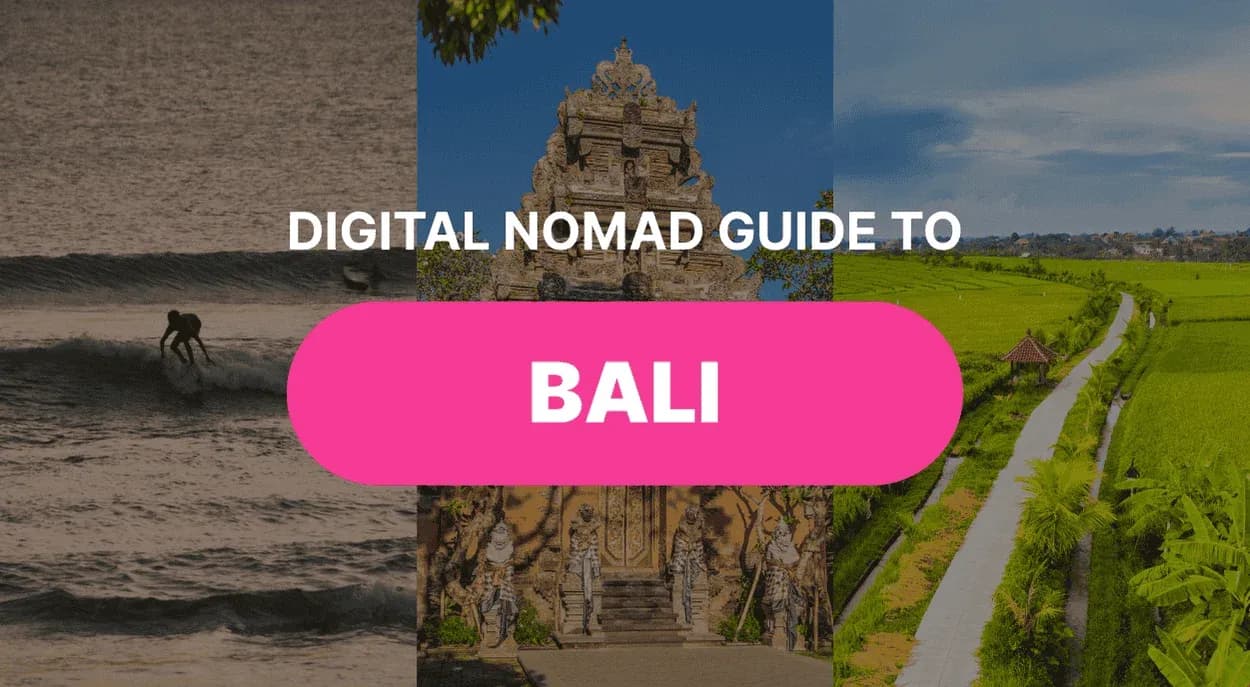

I just spent six weeks in Bali, split between Canggu and Ubud, and I left understanding why the island still tops every Asian nomad destination list. I also left with a clearer picture of what Instagram gets wrong: the traffic, the visa paperwork, and the price gap between a warung lunch and a Berawa brunch.
If you are weighing Bali as your next base, you are probably asking the same questions I had before I landed. Is the internet actually reliable? Can you live well on $1,500 a month, or is Canggu going to drain your savings by week three? And which visa route makes sense if you want more than a tourist stamp?
This Bali digital nomad guide covers costs with real numbers, the neighborhoods worth basing in, coworking and connectivity, visa options, and an honest verdict on who thrives here and who should look elsewhere. I have linked our deeper dives where they exist, including our Bali remote work visa breakdown and bootstrapping guide by area, so you can go deeper without reading the same advice twice.
Is Bali Good for Digital Nomads?
Yes, for most remote workers who can handle heat, scooters, and a crowded social scene. Bali is one of the most established nomad hubs on the planet for good reason: year-round warm weather, a deep coworking ecosystem, strong café culture, and monthly costs that still undercut most Western cities by 50% or more.
My friend Elena, a UX designer from Barcelona, moved to Canggu in March 2025 on a B211A visa. She told me her home WiFi in Berawa averaged 42 Mbps down on speed tests, her Tropical Nomad membership cost $120 per month, and she booked her first month's villa through Facebook groups for $850. She stayed four months. The traffic and noise near Batu Bolong were the only things that made her consider leaving early!
Bali is not a fit if you need pristine public transport, strict legal clarity on every visa edge case, or total quiet. It is also not the bargain it was in 2019. Canggu rents have climbed, and peak season (June through September, plus December) pushes prices up another 15 to 20%. But if you want community, nature, and a lifestyle that rewards showing up at the same café every morning, Bali still delivers.
Cost of Living in Bali for Digital Nomads
Most nomads I met in 2026 spent between $1,400 and $2,200 per month living comfortably in Canggu or Ubud. You can go lower in Sanur or inland Tabanan if you eat local and skip premium coworking. You can also blow past $3,000 fast if you rent a pool villa in Seminyak and eat Western food for every meal.
Indonesia uses the rupiah (IDR), but USD and EUR are widely accepted in nomad areas. I used a Wise account to hold IDR and pay rent via bank transfer, which saved me on ATM fees and bad airport exchange rates. Local ATMs often charge 25,000 to 50,000 IDR ($1.60 to $3.20) per withdrawal on top of whatever your home bank charges.
| Category | Budget ($1,100 to $1,400) | Mid-range ($1,800 to $2,200) |
|---|---|---|
| Accommodation | Guesthouse or kost, $350 to $500 | 1BR villa with pool, $700 to $1,100 |
| Food | Mostly warungs, $200 to $280 | Mix of warungs and cafés, $350 to $450 |
| Transport | Scooter rental + fuel, $70 to $90 | Scooter + occasional Grab, $90 to $130 |
| Coworking | Café minimum spend, $80 to $120 | Monthly pass, $100 to $230 |
| Utilities + home internet | Included or $40 to $60 | $60 to $100 |
| Insurance | $45 to $55 | $45 to $55 |
| Visa (amortized) | $30 to $50 | $30 to $50 |
| Leisure | $100 to $150 | $200 to $350 |
| Total | $975 to $1,305+ | $1,575 to $2,465 |
A warung plate of nasi campur runs 20,000 to 35,000 IDR ($1.30 to $2.25). A flat white at a laptop-friendly café in Canggu costs 45,000 to 65,000 IDR ($2.90 to $4.20). Long-term scooter rentals start around 800,000 to 1,200,000 IDR ($50 to $75) per month if you negotiate on the ground.
Budget tip: Book one or two weeks on Agoda or Booking.com, then negotiate a monthly rate directly with the host.Villa owners often drop 10 to 20% off the nightly rate for a 30-day commitment.
Internet and Coworking in Bali
Internet in Bali is better than most first-timers expect, but it is not uniform. In Canggu, Berawa, and Ubud center, home fiber from providers like First Media or Biznet often delivers 30 to 100 Mbps. In older guesthouses or jungle-side Ubud villas, you might drop to 10 to 20 Mbps or lose connection during heavy rain.
I tested WiFi at three spots during my stay: my Berawa villa (38 Mbps down), Tropical Nomad in Canggu (72 Mbps down), and Outpost Ubud (65 Mbps down). Video calls were fine at all three. Upload speeds were weaker, typically 8 to 15 Mbps, which matters if you upload large files or stream.
Before you sign a lease, ask the landlord for a speed test screenshot and whether the router is in your unit or shared. Many nomads keep a mobile backup. I activated an Airalo Indonesia eSIM before landing at Ngurah Rai, which meant I had data for Grab and WhatsApp the moment I cleared customs. Another excellent option is Saily, which runs on the Telkomsel network (Bali's strongest provider) and offers competitive data packages that you can install in under two minutes. Local SIMs from Telkomsel work well too, but the airport queue can eat 30 minutes you do not have after a long flight. See our best eSIMs for Bali roundup for plan comparisons.
Public café WiFi is fine for email, but I would not trust it for client calls without a VPN. I used NordVPN on hotel and café networks throughout the trip. Coworking spaces are the safer bet for important meetings.
Top Coworking Spaces in Bali
- Tropical Nomad (Canggu): The default choice for networking. Monthly pass around $120, night-only pass $90.Busy, social, reliable WiFi.
- Outpost (Canggu and Ubud): Polished spaces with coliving options. Ubud monthly pass about $230, night plan $99.
- AT 06 (Canggu): Workspace plus gym and restaurant.Around $100 per month.
- Ubud Space (Ubud): Central, bright, quieter than Canggu options.About $109 per month.
- Tribal Bali (Pererenan): Coworking-coliving hybrid. Non-guests pay roughly $20 minimum spend for six hours.
For café work, our Canggu café guide lists spots with verified outlets and WiFi.Minimum spend models are common in Pererenan and Uluwatu, often 75,000 to 150,000 IDR ($5 to $10) for a half day.
Best Neighborhoods for Digital Nomads in Bali
Where you base matters more in Bali than almost anywhere else in Southeast Asia. The island is small, but traffic between south and central Bali can turn a 12 km trip into a 70-minute scooter ride at rush hour.
Canggu and Berawa
The densest nomad scene on the island. Surf, flat whites, startup energy, and the most coworking spaces. One-bedroom villas run $700 to $1,200 per month on annual-style leases, higher if you book month-to-month in peak season. Traffic on Batu Bolong and Raya Canggu is genuinely bad from 4 to 7 pm.Best for extroverts, networkers, and anyone who wants everything walkable or scootable.
Ubud
Rice terraces, yoga, and a slower rhythm. Rent runs $500 to $900 for a modern one-bedroom villa, often with more space than Canggu at the same price. The nomad crowd is smaller and less startup-heavy. Internet can be patchy in jungle-side stays. Best for writers, deep-work types, and anyone who prefers temples over beach clubs.
Pererenan
Canggu's quieter neighbor.Still close to Berawa, but fewer traffic jams and lower rents ($700 to $1,300 for mid-range villas).Growing café scene, minimum-spend work spots.Best if you want Canggu access without living in the chaos.
Sanur and Uluwatu
Sanur is calmer, family-friendly, and cheaper ($300 to $500 for budget rooms, $700 to $1,200 for mid-range villas). Smaller nomad community. Uluwatu suits surfers and hermit-mode workers: stunning cliffs, fewer coworking options, monthly passes around $200 to $250 at spots like Monday or Uluwatu Hub.
If you're still deciding by budget, our area-by-area bootstrapping guide breaks down Canggu, Ubud, Sanur, Pererenan, and Uluwatu with pros and cons for each.
Getting to Bali and Getting Around
Most international nomads fly into Ngurah Rai International Airport (DPS) in Denpasar. Direct flights connect from Singapore, Kuala Lumpur, Bangkok, Dubai, and major Australian cities. The official B1 Visit Visa (e-VoA) is available online for 500,000 IDR (about $32 USD) for 30 days, extendable once for another 30 days.If you apply online via the official portal at evisa.imigrasi.go.id before landing, you can use the airport's new Autogates, which let you breeze through immigration in under 30 seconds!
On the ground, scooters dominate. A monthly rental costs 800,000 to 1,500,000 IDR ($50 to $95). You need an international driving permit and a helmet. Police do run checks in tourist areas. Grab and Gojek rides are cheap: a 3 km trip often costs 15,000 to 25,000 IDR ($1 to $1.60).
If you are continuing to Lombok, the Gili Islands, or Java, fast boats and ferries leave from Sanur and Padang Bai. I booked mine through 12Go to compare schedules and prices in one place. Padang Bai to Gili Trawangan runs roughly 450,000 to 650,000 IDR ($29 to $42) depending on operator and season.
The Bali Tourist Levy (150,000 IDR)
Starting in 2024 and continuing through 2026, the Bali Provincial Government enforces a mandatory Bali Tourist Levy of 150,000 IDR (approx. $10 USD) per person for all international visitors entering the island. This is a local provincial tax and is separate from (and in addition to) your Indonesian visa fee.
You can pay this levy online before departure via the official Love Bali website (lovebali.baliprov.go.id) or app. Once paid, you will receive a QR code via email to scan at airport checkpoints. If the Love Bali portal is unstable, you can also pay upon arrival at the airport's BRI counter. KITAS/KITAP holders, diplomatic, and student visa holders can apply for an exemption, but you must submit your request via the Love Bali portal at least one month before arrival.
- Apply for e-VoA (B1 Visa): Do this on evisa.imigrasi.go.id to use the airport's fast-track Autogates.
- Pay the Bali Tourist Levy: Pre-pay the 150,000 IDR fee on lovebali.baliprov.go.id and save your QR code.
- Submit e-Customs Declaration (e-CD): Complete the form online within 3 days of your flight and save the QR code.
- Install eSIM: Purchase and activate your Airalo or Saily eSIM before landing so you have instant data.
- Book Airport Pickup: Arrange a ride through your guesthouse or pre-book on Grab to avoid the aggressive airport taxi crowd.
Visa Options for Digital Nomads in Bali
Indonesia does not offer a visa officially named "digital nomad visa," but several routes cover most remote worker timelines. Pick based on how long you plan to stay and whether you need fully legal remote work status.
| Visa type | Max stay | Approx.cost | Best for |
|---|---|---|---|
| B1 Visit Visa (e-VoA) | 30 days (+ 30 day extension) | 500,000 IDR (~$32) + extension fee | Short scouting trips (Autogate eligible) |
| B211A / C2 Visit Visa | 180 days (60 + 2 extensions) | $200 to $400 with agent | Most nomads, 2 to 6 months |
| E33G Remote Worker KITAS | 1 year (renewable) | $630 to $900+ | Legal long-term remote work ($60k income + $2k bank balance) |
| Second Home Visa | 5 to 10 years | ~$130,000 bank deposit + fees | High-net-worth long stays |
The B211A is what most nomads use: 60 days on arrival, extendable twice for 30 days each at local immigration offices (Kantor Imigrasi). Apply online through the official portal at evisa.imigrasi.go.id or via a licensed agent who provides sponsorship. Remote work for foreign employers exists in a legal gray area on this visa, but working for Indonesian clients or companies is not permitted.
The E33G Remote Worker visa, launched as Indonesia's answer to structured nomad stays, is a one-year residence permit (KITAS) that allows you to live in Indonesia while working legally for an overseas employer. It requires proof of an annual income of at least $60,000 USD ($5,000/month) from foreign sources, a formal employment contract with a company registered outside Indonesia, and international health insurance. Additionally, you must show a personal bank balance of at least $2,000 USD held consistently for the preceding 3 months. It does not permit working for local Indonesian clients or earning local income. Independent freelancers without a formal contract with an overseas company do not qualify. Full details are in our Bali visa guide.
Health insurance is not always mandatory for short visas, but I would not live in Bali without it.Medical evacuation from a scooter accident or dengue hospitalization can run into tens of thousands of dollars. SafetyWing Nomad Insurance Complete covers outpatient and inpatient care in Indonesia for most nomads I know. Compare plans in our nomad insurance guide.
Stay 183 days or more in a calendar year and you may trigger Indonesian tax residency. Our digital nomad tax guide explains the basics.When in doubt, talk to a cross-border tax advisor before committing to a full year.
Pros and Cons of Living in Bali as a Digital Nomad
Pros: Established nomad community with daily networking events.Year-round warm weather and easy access to nature.Low cost vs.US and Western Europe at mid-range tiers.Deep coworking and café infrastructure.Easy regional travel to Lombok, Java, and Singapore.
Cons: Severe traffic in Canggu and south Bali.Visa rules are confusing and the popular B211A is not explicitly legal for remote work.Rising rents in top nomad zones.Scooter accidents and dengue are real risks.Rainy season (November to March) brings daily downpours and occasional power cuts.Easy to burn out on socializing instead of working.
James, a developer from Toronto I met at Outpost Ubud, planned a three-month stay and extended to five. He loved the $2.40 nasi goreng and the morning rice-field walks. He hated that his 8 pm video calls sometimes coincided with generator noise during a power cut in February. He moved to Sanur for his last month for stabler utilities. That tradeoff story is very Bali:you gain lifestyle, you negotiate infrastructure.
Who should choose Bali? Remote workers who want community, can handle scooter culture, and earn enough to live at $1,500 to $2,500 without stress. Ideal stay length: one to four months for a first trip, up to six months if your visa and budget allow. Who should skip it? Anyone who needs bulletproof legal clarity, hates humidity, or wants walkable cities without traffic. Consider Chiang Mai or Lombok if Bali feels overdone or overpriced for your stage.
FAQ
Is Bali expensive for digital nomads?
Not compared to Western Europe or the US, but it is no longer the $800 paradise of 2018.A comfortable month in Canggu or Ubud runs $1,800 to $2,200 including rent, food, scooter, coworking, and insurance.Budget nomads can hit $1,100 to $1,400 by eating warung food, renting a kost, and skipping premium beach clubs.
Canggu or Ubud for digital nomads?
Choose Canggu if networking, surf, and nightlife matter more than quiet.Choose Ubud if you want rice terraces, yoga, and deep-work energy.Canggu costs 20 to 30% more for comparable housing.Ubud has fewer nomad events but better focus-friendly mornings.
What visa do most digital nomads use in Bali?
The B211A visit visa is the most common route for stays up to 180 days.Shorter trips use the 30-day Visa on Arrival plus one extension.Nomads earning $60,000 or more per year from foreign employers can apply for the E33G remote worker KITAS for a legal one-year stay.
Is Bali internet good enough for video calls?
Yes in Canggu, Berawa, Ubud center, and most coworking spaces, where 30 to 100 Mbps is typical.Verify home WiFi before signing a lease.Keep a mobile eSIM or local SIM as backup, especially during rainy season when power and connections can drop.
What is the best time to visit Bali as a digital nomad?
Dry season (April to October) brings less rain and more crowds.Shoulder months like April, May, and October balance weather and prices.Rainy season (November to March) is cheaper and quieter, but expect daily afternoon storms and occasional flooded roads in Canggu.
Ready to Base Yourself in Bali?
Find places, workspaces, events and a community that gets you.
Get Freaking Nomads Pro
Written by
Irene Wang
Digital nomad and co-founder of Freaking Nomads. She shares raw, unfiltered stories and helps nomads find resources to thrive while traveling and working remotely.

Freaking Nomads is supported by you. Clicking through our links may earn us a small affiliate commission, and that's what allows us to keep producing free, helpful content. Learn more
Read Next

Remote worker’s guide to Puerto Escondido, Mexico


The Ultimate Digital Nomad Guide To Nice