The Ultimate Digital Nomad Guide To Nice
Explore Nice's best spots for digital nomads: coworking spaces, cafés, connectivity & more.
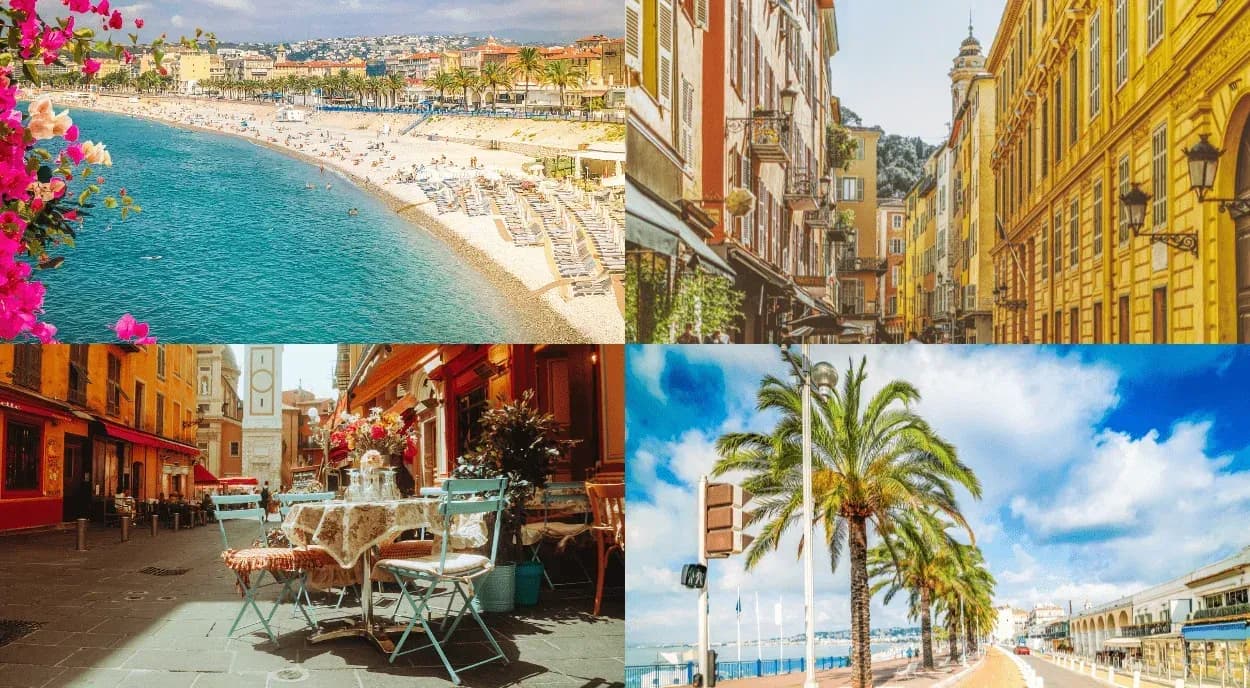
Nice isn’t the first place people think of when they picture digital nomad hotspots in Europe... But honestly, it should be. I spent some time working from here, and leaving was genuinely hard. There’s something about the mix of turquoise water, palm-lined promenades, and that very Southern French, very laid-back culture that hits differently.
If you’re wondering whether Nice is actually a good base for remote work, this guide will walk you through everything: coworking spots, cost of living, best neighbourhoods, internet speeds, and what life on the Riviera really feels like as a nomad.
My Personal Experience as a Digital Nomad in Nice
This was my first time visiting the south of France, so I arrived with a mix of excitement and a little bit of uncertainty about how “digital-nomad-friendly” it would actually be. I’d dreamed of coming here ever since watching La Piscine, that whole sun-drenched Riviera aesthetic had lived rent-free in my mind for years. So when my summer travels through France (and eventually Spain) lined up, I knew this was my moment to finally experience it for myself.
I had 21 days in early June, which is basically prime Nice season, so I tried to squeeze in as much as possible: beach walks, iconic viewpoints, café hopping, and plenty of laptop sessions in between. And honestly, Nice exceeded every expectation I had. The city has this effortless mix of culture, great food, and gorgeous coastal views. But what surprised me most was how much there is to do right around it. Incredible hikes, quick day trips to places like Èze, Cannes, and Villefranche-sur-Mer… It’s all ridiculously close.
From a digital nomad perspective, it worked far better than I expected. The vibe is relaxed enough that you can properly focus without feeling rushed, and the infrastructure is solid. You have reliable WiFi, plenty of cafés, and a few good coworking spaces (I’ll get into those later).
Why I loved Nice as a Digital Nomad
Before getting into the details, here are the main reasons why Nice ended up being one of my favourite digital nomad bases in Europe:
1. The perfect balance of city energy and calm
Nice has this rare mix of city life and seaside vibes. One moment you’re weaving through the Cours Saleya markets with their colours, smells, and noise. The next you’re sitting in front of the calm turquoise water along the Promenade des Anglais. As a digital nomad, that contrast was perfect. I could work with peaceful sea views during the day, then head into the centre after logging off to people-watch, grab a drink, or just wander around the old town.
2. It’s incredibly connected and easy to get around
I was genuinely impressed by how accessible everything was. The airport is just a short tram ride away, and the local trains and trams make it ridiculously easy (and cheap, the tram from the airport is €7) to get around. Nice is also very walkable, which meant I saved a lot on transport and got to enjoy the old town’s narrow streets, pastel buildings, and those unexpected sea views on the way to cafés.
3. Reliable infrastructure for remote work
For a city known for tourism, Nice is surprisingly reliable for getting work done. There are plenty of coworking spaces and cafés, and the internet speeds were consistently strong. I never once worried about a shaky Zoom call. Most places were also genuinely nice to sit in: stylish interiors, good pastries, strong espresso… basically, the kind of cafés where you can happily camp out for a few hours.
What I Didn’t Like About Nice
Even though I loved my time in Nice, there were a couple of things that didn’t fully work for me as a digital nomad...
1. The cost of living adds up quickly
Even though it’s cheaper than Paris, Nice is still… well, Nice. Things can get expensive fast. Coworking spaces and WiFi cafés were great, but using them every day definitely stretched my budget. If you’re planning to stay here for a while, make sure your income can comfortably support it, or consider keeping your stay shorter. That said, part of what you’re paying for is the location. Being so close to places like Cannes, Monaco, Menton, and Èze naturally comes with a price tag.
2. Summer crowds can be a lot
Nice in summer is packed. Beaches, restaurants, and even the trams feel full. That means cafés and coworking spaces fill up quickly too. That’s why I was really happy I went from April to early June. You get warm weather, early summer light, and far fewer crowds. One thing that surprised me, though, is that in peak summer a lot of local businesses close because owners go on holiday, so the places that stay open become even more crowded.
What is the Cost of Living in Nice as a Digital Nomad?
Nice is absolutely beautiful, but it’s not one of the ultra-cheap destinations. That said, with a bit of smart planning, you can live really nicely here. During my 21-day stay in early June, I budgeted around US$1,000 (roughly €930-€1,000) for the period, depending on how up-market the accommodation was and how much I ate out.
From my café visits around Nice, I found that a regular coffee cost around US$3.50 (≈ €3.20). You really pay a little more for the setting, like sea views or old town cafés, but honestly, it was some of the best coffee I’ve had. Dining out works out pretty well for the value too: lunch or dinner in a standard restaurant averaged around US$15-20 (≈ €14-€18), and I even had excellent fresh-seafood meals for less than US$15 (≈ €14) that felt like a real treat.
On the accommodation side: for longer stays you’ll see one-bedroom apartments in the city centre from around €730-€850/month depending on neighbourhood. So for a shorter stay like mine you can do things more flexibly (maybe a serviced apartment or Airbnb) but if you stay several months, rent becomes the big cost.
In short: If you’re in Nice for a few weeks, budget around US$1,000 or so (assuming modest accommodation and eating out thoughtfully), and you’ll live well. If you’re staying a longer term, expect your monthly budget to go up, especially if you pick a central, sea-view place, but the trade-off is the Riviera lifestyle you’re living.
What are the Visa Options for Digital Nomads in Nice?
Unfortunately, there’s no dedicated “digital nomad visa” in France. But don’t let that put you off! If you’re from the EU or EEA (or Switzerland), you’re in luck: you can live and move around France under freedom of movement rules without needing a visa. That means you can stay and work (remotely for foreign clients) freely.
For everyone else (non-EU/EEA/Swiss nationals), if you plan to stay more than 90 days then you’ll need a long-stay visa (called a Visa de long séjour). One standard route is the Visa de long séjour valant titre de séjour (VLS‑TS) (Visitor category) which allows you to stay up to 12 months.
Another route, if you’re self-employed or freelance (e.g., working remotely for non-French clients) is the Visa Profession Libérale or an Entrepreneur/Independent-Professional visa. This gives you more flexibility in working your own business while based in France
Here are a few key details I found that helped me understand how this works:
- If you apply for the VLS-TS, you’ll need to show you can support yourself financially (reports say around €1,400/month net for individuals) and have comprehensive private health insurance.
- With the Entrepreneur/Profession Libérale route you’ll often need to show a business plan, that you have remote clients (non-French clients often make things simpler), and sufficient income or savings.
- Once you arrive in France with a long-stay visa, you’ll usually have to validate it online (through the Office Français de l’Immigration et de l’Intégration (OFII) portal) within 3 months.
- Also, it’s important to check tax residency: if you stay 183 days or more in France in one calendar year, you may become tax resident and wince at global income declarations.
What It's Like to Work Remotely in Nice
Working remotely in Nice felt calm, grounding, and honestly a little bit luxurious. Most of my mornings started in a café, and I’d work there until the lunch rush began, then switch to a coworking space for a focused afternoon, and end the day exploring a new neighbourhood, watching the sunset on the Promenade, or grabbing a late dinner in the old town. It’s an incredibly easy place to build a healthy work-life routine without even trying.
Internet and Wi-Fi
Wi-Fi in Nice was consistently reliable for me. Most cafés I worked from had speeds between 50–100 Mbps, which was perfect for calls and everyday work.
Mobile data was also super reliable. I used a European eSIM from Holafly the whole time, and honestly it made things so much easier than dealing with a local SIM and all the usual French bureaucracy. I had stable 4G and 5G pretty much everywhere I went, so for a coastal city that isn’t exactly a European “tech hub,” the connectivity was way better than I expected!
Best Work Spots and Laptop-Friendly Cafes
Here are the places I kept returning to:
- Le Labo: Stylish, modern, and a bit social. Great for days when you want a creative vibe.
- Les Satellites: Very relaxed and community-focused. It has that “everyone actually works here” energy.
- Emilie and the Cool Kids: Trendy, cosy, and perfect for a slow morning with good coffee and pastries.
- Paper Plane Café: One of my favourites. Strong coffee, a chill atmosphere, and friendly staff.
- Wojo Nice: Modern, clean, and in a really convenient location. Great for deep-work sessions.
Best Neighbourhoods to Live in as a Digital Nomad in Nice
One thing I learned quickly is that each neighbourhood in Nice has its own very specific vibe, and choosing the right one can completely change your experience.
The Old Town (Vieux Nice) is the most atmospheric: colourful buildings, tiny alleys, markets, and energy from morning to night. It’s amazing if you want charm and convenience, though it can get noisy and Airbnb prices sit on the higher end.
Jean-Médecin and the areas around Avenue Victor Hugo feel more “modern city": wide streets, great cafés, coworking spots, big supermarkets, and really walkable. Prices here are mid-range and it’s one of the easiest areas to live without a car.
If you want something calmer, Cimiez is a leafy, elegant residential hilltop neighbourhood with museums, parks, and beautiful old buildings. It’s quieter, more local, and tends to be a bit more expensive, but perfect if you want peace after work.
Another favourite of mine was Le Port, which has a young, creative vibe. Lots of cool restaurants, bars, and an up-and-coming feel without the chaos of the Old Town. Rents here vary but are generally more reasonable than right on the promenade.
And then there’s Promenade des Anglais itself: picture waking up with sea views every morning… and paying for it. It’s stunning, but you’re definitely paying the Riviera premium.
Must-Do Things in Nice
Nice is one of those cities that feels effortlessly good to explore alone. It’s safe, beautiful, and full of little moments that make you grateful you chose this lifestyle. Here are the things that made my time here unforgettable:
- Start your morning at Cours Saleya Market: Grab a coffee, wander past the flower stalls, taste a fresh pastry, and soak in that slow, sunlit French-morning energy.
- Walk the full Promenade des Anglais: It’s iconic for a reason. Do it at sunset if you can. The sky turns pink and the whole coastline feels like a movie set.
- Climb up to Castle Hill (Colline du Château): Yes, it’s a bit of a workout, but the panoramic view of the bay is one of the best in Europe. Bring water and take your time.
- Spend an afternoon in the Old Town: Get lost in the narrow streets, grab a long lunch at a small bistro, and people-watch without feeling rushed. It’s perfect for solo travellers.
- Take a day trip to Èze: A postcard-perfect medieval village perched on a cliff. It’s tiny, magical, and the views are unreal.
- Swim in Villefranche-sur-Mer: Just a short train ride away and home to some of the clearest, prettiest water I’ve ever seen in Europe. It feels like a secret escape.
- Visit Monaco for a totally different vibe: It’s only about 30 minutes away. Go for the scenery, the marina, and the fun of pretending you live in a James Bond film.
- Watch the world go by over a long solo lunch: Nice is one of those rare places where eating alone feels completely natural. Find a table in the Old Town, order something delicious, and enjoy being exactly where you are.
Top Tips for Digital Nomads in Nice
Visit in the shoulder seasons
If you can, avoid peak summer. Coming in April, May, or early June makes a huge difference: prices are lower, the weather is perfect, and you get a much more “local” version of Nice without fighting for space on the beach or in cafés.
Learn a few basic French phrases
It’s true: people in Nice can be a little reserved at first, especially if you jump straight into English. Even learning simple things via a language app like bonjour, merci, pardon, and s’il vous plaît made daily life a lot smoother for me. Locals genuinely appreciate the effort.
Use the tram as much as you can
The tram system is fast, clean, and ridiculously good value. For around €1.70 per ride or €8–€7 for a day pass, you can get all over the city and even to the airport. I used it constantly and it just made exploring and commuting to cafés so easy.
Pack comfortable shoes
Nice is a very walkable city, and you’ll be doing more steps than you think, especially between the old town, the promenade, and different work spots. Flip-flops won’t cut it. Bring one good pair of comfy walking shoes, your feet will thank you!
Avoid Ariane
This is the one area that didn’t feel safe to me. As a solo female traveller, Ariane made me uncomfortable, and it’s generally known for higher crime rates. I’d avoid staying there or passing through late at night.
Ready to Live and Work in Nice as a Digital Nomad?
Find places, workspaces, events and a community that gets you.
Get Freaking Nomads Pro
Written by
Esme Sheppard
English Language graduate and full-time adventure seeker. After spending time exploring Southeast Asia and travelling on the road across the UK and Europe, she's been documenting her experiences to share them with other nomads.

Freaking Nomads is supported by you. Clicking through our links may earn us a small affiliate commission, and that's what allows us to keep producing free, helpful content. Learn more
Read Next

Sao Miguel (Azores) for Digital Nomads: The Ultimate Guide

Guide to Living in Malta as a Digital Nomad