Malta Nomad Residence Permit: Requirements and How to Apply
Discover Malta's Digital Nomad Visa, offering legal residency for remote workers from non-EU/EEA countries.
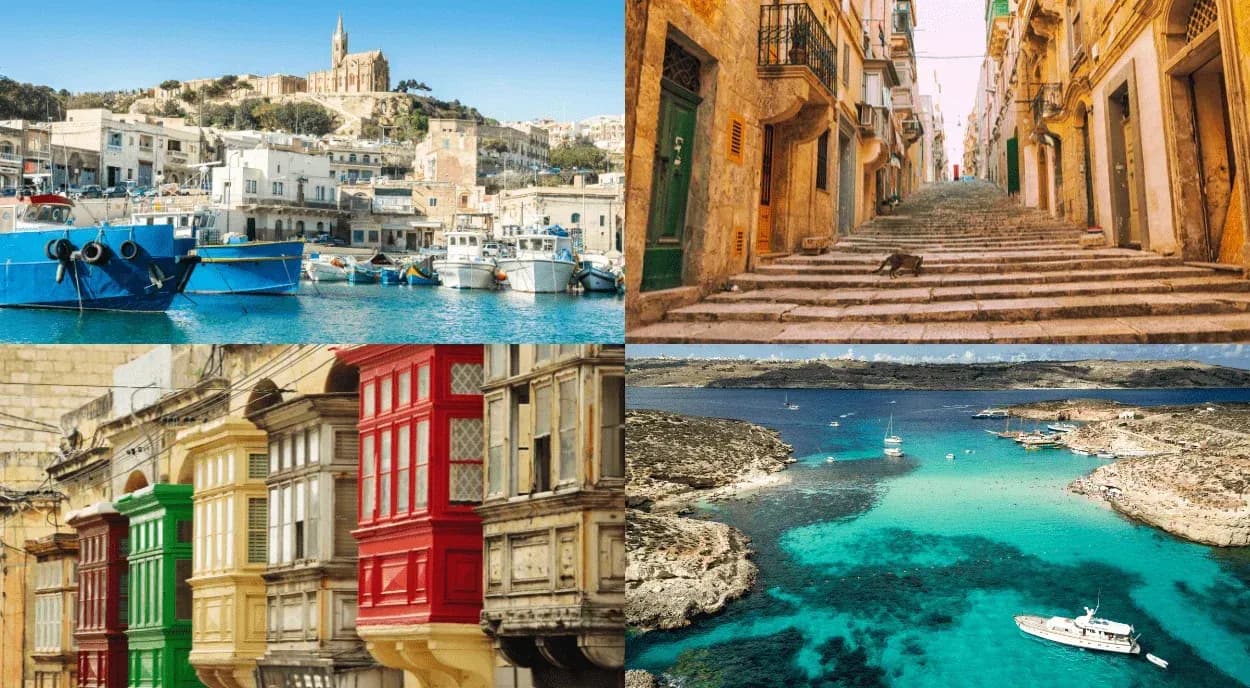
Malta has long been a favorite among digital nomads, and it’s easy to see why. A Mediterranean climate, lower cost of living compared to other Western European countries, excellent infrastructure, and easy access to the rest of Europe make it an ideal remote work base.
It was also one of the first European countries to roll out an official digital nomad visa. In 2021, Malta launched the Nomad Residence Permit, a program designed to let remote workers, freelancers, and business owners live on the island while working for clients or companies abroad.
So, what does it take to apply? What are the actual requirements, the paperwork, the costs? In this guide, I’ll break it all down, step by step.
Quick Visa Facts
Visa validity period
12 months, renewable up to 3 times
Extendable?
Yes, up to a total of 4 years
Who can apply?
Non-EU/EEA/Swiss remote employees, freelancers, or business owners working with clients abroad
Minimum income requirement
€42,000 per year (gross)
Application cost
€300 per applicant + €100 for residence card
Processing time
30 working days
What Is the Malta Nomad Residence Permit?
The Nomad Residence Permit (NRP) is the official name of Malta’s digital nomad visa or the country’s remote work visa scheme for non-EU nationals. It’s run by the Residency Malta Agency, and it lets non-EU/EEA/Swiss remote workers live in Malta while they’re employed by a foreign company, running their own business registered abroad, or freelancing for clients based outside Malta.
The permit starts at one year and can be renewed up to three times (so, up to four years total) as long as you still meet the rules, including spending at least 5 months a year in Malta if you want to renew.
The NRP does not allow you to take up employment with a Maltese company or to engage in local business activities in Malta, and your income must be derived from abroad. Also, it does not directly lead to permanent residency or citizenship as the permit is intended for a medium-term stay.
Why Choose Malta as Your Digital Nomad Base?
There are plenty of beautiful places in Europe... But few are as remote‑work‑friendly as Malta.
What stands out first is how easy it is to settle in. English is an official language (alongside Maltese), so things like finding accommodation, filling out government forms, or opening a bank account are pretty straightforward.
The infrastructure’s solid, too. Fast, stable internet (including fibre and 5G), plenty of coworking spaces, and laptop-friendly cafés, especially around Valletta, Sliema, and St. Julian’s. It’s a small island, but everything you need is within easy reach.
Malta ranks among the safest countries in the world, with a tight-knit community and a reputation for hospitality. And the country’s digital nomad community is booming. Between coliving spaces, meetups, and networking events, it’s easy to connect with others and build a sense of community, even if you’ve just arrived.
You’ll also be living in a highly multicultural environment. Malta is home to a large international expat and nomad population, and its progressive legal framework makes it an open and welcoming place for people from all backgrounds.
Location-wise, Malta’s right in the middle of the Mediterranean, which makes weekend trips to mainland Europe extremely convenient. Rome, Barcelona, Lisbon are all just a short flight away. And being on Central European Time (CET) means you can easily collaborate with teams across Europe during the day, Asia in the morning, and the US in the evening.
And then there’s the weather: over 300 days of sunshine a year. Winters are mild, skies are almost always blue, and the island vibe is super laid-back. After work, you can head out for a coastal walk, go for a swim, or just kick back with a cold Cisk (the local beer) by the sea.
Malta is also fairly affordable by European standards. A comfortable nomad budget sits around €1,500–2,000 per month, depending on your lifestyle. Rent for a studio averages €700/month, while a larger apartment can go for around €1,200. Public transport is free for residents, and if you prefer more freedom, a scooter is more than enough for the island. Expect to pay around €2.25 for a good coffee and €15 for a solid Mediterranean meal.
Plus, if you apply for the Nomad Residence Permit, you might get a free Nomad Heritage Card (while supplies last). It gives you and a guest free access to a bunch of historical and cultural sites across the islands. It’s a small gesture, but it goes a long way in making you feel like more than just a visitor.
Who Can Apply for the Malta Nomad Residence Permit?
Malta’s NRP is open to anyone outside the EU, EEA, or Switzerland. So, if you’re from countries like the US, UK, Canada, Australia, South Africa, etc., you’re good to go.
To be eligible, you need to tick one of these boxes:
- You work remotely for a company that’s based outside Malta
- You own or are a partner in a business registered abroad
- You’re a freelancer or consultant with clients who are all based outside the country
Basically, as long as your income comes from outside Malta and you can do your job remotely, you’re in the clear.
There’s also a minimum income requirement: you need to earn at least €42,000 a year before tax, which is around €3,500 a month. It’s not the cheapest visa out there, but Malta’s high quality of life makes it a fair trade-off.
If you’re planning to bring your partner or kids with you, that’s totally allowed. You can include your immediate family (spouse or long-term partner, and children under 18) in your application. The best part is you don’t need to prove a higher income just because they’re coming along.
Malta Nomad Residence Permit: Required Documents
To apply for the Malta Nomad Residence Permit, you’ll need to submit a few key documents. Here’s exactly what you’ll need:
- Application form – One for you, and one for each family member if you’re applying with dependants.
- Motivation letter – A short explanation of why you want to move to Malta and work remotely from there.
- Passport – A valid passport, with copies of all pages (including the blank ones).
- Proof of remote work – If you’re employed, a letter or contract showing you work remotely for a company outside Malta; If you’re self-employed or own a business, proof that your business is registered abroad and that your work is done remotely.
- Bank statements – To show you meet the minimum gross income requirement of €42,000 per year (€3,500/month).
- CV or resume – A quick overview of your work and education background.
- International health insurance – Your policy must cover you (and any dependants) in Malta and other European countries, with a minimum of €100,000 in coverage.
- Proof of accommodation – Once your application is conditionally approved, you’ll need to show a rental or purchase contract for a place in Malta.
- Police conduct certificate – A clean criminal record from your home country. This may need to be apostilled or legalized, depending on where it’s issued.
How to Apply for the Malta Nomad Residence Permit
The great news is the whole application process for the Malta NRP is entirely online. Here’s how it works, step by step:
1. Get your paperwork in order
Start by gathering all the required documents. Make sure everything is translated (if needed), certified, and apostilled. It’s the least fun part, but once it’s done, the rest is pretty smooth.
2. Submit your application
Email your completed application and supporting documents to the Residency Malta Agency. They’ll review everything and let you know if anything is missing.
3. Pay the application fee
If your documents are in order, the agency will ask you to remit €300 per applicant. This applies to both the main applicant and any dependants.
4. Wait for pre-approval
The agency will assess your application within 30 working days. They’ll check your background, including any criminal records or past Schengen visa issues. If everything looks good, you’ll receive a pre-approval letter.
5. Sort your stay and insurance
Once you’re pre-approved, it’s time to lock in your accommodation (either a rental for at least one year or a property purchase) and buy international health insurance that covers you in Malta and other European countries.
6. Travel to Malta
Book your flight and head to the island. If you need a Schengen visa to enter Malta, make sure you get that sorted first. Once you arrive, notify the agency and they’ll schedule an appointment to take your biometrics (fingerprints and photos).
7. Pick up your residence card
About two to three weeks after your biometrics appointment, your residence card should be ready. The agency will email you when it’s time to pick it up, and yes, you’ll need to collect it in person!
Malta Nomad Residence: Costs and Processing Time
Here’s a breakdown of the main costs involved in getting the Malta digital nomad visa:
- Application fee: €300 per applicant (including dependants)
- Residence card issuance: €100
- Health insurance: typically around €1,800
- Accommodation: rent varies by location, but expect to pay around €700/month for a studio and €1,200/month for a 3-bedroom apartment
Once you submit your application, the full process usually takes 30 working days, from submission to card collection.
Tax and Legal Considerations
One of the most common questions we hear: “Do I have to pay taxes in Malta?” The short version: yes and no, depending on how long you stay and how your income is structured.
If you hold the Malta NRP and keep your stay under 183 days (and meet the other eligibility criteria), you’re unlikely to be treated as a Maltese tax resident. According to general rules, spending fewer than 183 days in Malta usually means you’re not automatically a tax resident and therefore will generally not be taxed in Malta on your foreign‑sourced income.
If you spend more than 183 days in Malta in a tax year, under the Nomad Residence Permits (Income Tax) Rules (Legal Notice 277 of 2023) issued 7 December 2023, “authorised work” (remote work you’re doing from Malta for a foreign employer or foreign clients) you benefit from tax‑exempt income for the first 12 months. After those first 12 months, that “authorised work” income is taxed at a flat rate of 10%, subject to double‑taxation relief (if applicable).
Frequently Asked Questions
How long does approval take?
Pre-approval typically arrives within 30 working days after you submit your application. Once approved, you’ll need to travel to Malta to complete the biometrics appointment (fingerprints and photo). After that, it usually takes 4 weeks to receive your residence card.
Can I renew the permit?
Yes. The permit is valid for 12 months and can be renewed up to three times, giving you a maximum stay of four years. To renew, you must continue meeting the eligibility requirements and spend at least five months per year in Malta.
Do I have to pay taxes in Malta?
Only if you spend more than 183 days in Malta in a calendar year and become a tax resident. In that case, income from “authorised work” under the Nomad Residence Permit is exempt from tax in the first year, then taxed at a flat rate of 10% from the second year onward. If you stay under 183 days, your foreign income is generally not taxed in Malta.
Can I bring my family?
Yes. You can include your spouse or long-term partner and children under 18 in your application. There’s no additional income requirement, and you just need to meet the standard €42,000 annual minimum and submit documents proving your relationship.
How is it different from a tourist visa?
A tourist visa usually allows you to stay in Malta for up to 90 days and doesn’t give you any right to live or work from there long-term. The Nomad Residence Permit lets you legally live in Malta for up to four years, while continuing to work remotely for clients or companies based abroad.
Ready to Make Malta Your Next Digital Nomad Base?
Find places, workspaces, events and a community that gets you.
Get Freaking Nomads Pro
Written by
Angelina Bertoni
After trying the conventional life, I packed everything into a backpack and started walking the world. I feel the energy of the spaces I explore — and that’s what I write about.

Freaking Nomads is supported by you. Clicking through our links may earn us a small affiliate commission, and that's what allows us to keep producing free, helpful content. Learn more
Read Next

Turkey Digital Nomad Visa: How to Apply and Requirements
Estonia Digital Nomad Visa: Eligibility and How to Apply